
But perhaps no demographic factor shows as stark of a difference as age.
Nearly 92% of adults over 65 have had at least one vaccine dose and over 81% are fully vaccinated, higher than any other age group, according to data from the US Centers for Disease Control and Prevention.
Younger age groups have much lower vaccination rates, dragging down the country’s overall coverage by 20 percentage points. Among people 12 and older, 71% have had at least one dose and 60% are fully vaccinated, the CDC says.
Still, the vaccination differences by age groups are clear even in less-vaccinated parts of the country. In Alabama, one of the country’s least vaccinated states, 71% of people over 65 are fully vaccinated — the same rate as for all adults in New York. No matter the location, older people understand the importance of vaccination.
So why exactly are older adults so much more vaccinated than younger folks?
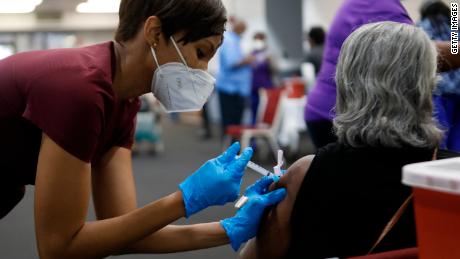
Interviews with several doctors, CDC data and polling from the Kaiser Family Foundation show five main reasons for the age difference: their earlier eligibility, the virus’s exponentially more severe impact on older people, their wiser perspective on life, their increased access to the medical system due to Medicare, and their functional immunity to vaccine misinformation.
Dr. Tim Farrell, the chair of the American Geriatrics Society’s Ethics Committee and professor of medicine at the University of Utah School of Medicine, said young people should get vaccinated as a form of “inter-generational justice” for older people.
“What do the young owe the old? What do the old owe the young?” he asked CNN. “The older adults were the ones who were sitting home, and a lot of them were isolated for a year or more. They stayed home, they got vaccinated, they did their fair share. I think it’s time for some reciprocation.”
Older people were eligible earlier
A key explanation is time. People over age 65 became eligible to be vaccinated at earlier dates, so they have had more time to get vaccinated.

Not everything can be explained by this timeline, though, and the uptick among younger age groups has been slower, according to CDC data.
Still, the data shows that the longer an age group has been eligible, the more of them are vaccinated.
Older people are at much higher risk of severe Covid
A second major explanation is that older people are more willing to get vaccinated because they are at far higher risk.

“The mortality is basically exponential when you get past age 65. It just increases so substantially,” Farrell said. “My patients are well aware of that.”
For younger people, the risk of severe Covid-19 illness and death is comparatively much lower, so vaccination is less of a clear life-or-death situation.
“People didn’t understand that something like 0.5 to 1% death rate is still really high. That still means thousands of people dying,” said Dr. Peter Hotez, dean for the National School of Tropical Medicine at the Baylor College of Medicine.
Older people know from experience and perspective
Another reason older adults are more vaccinated stems from their personal experiences with vaccines. They remember the days when infectious diseases like polio and measles sickened and killed classmates, friends and family members.
Farrell saw this firsthand. Earlier in the pandemic, a patient pulled out a decades-old polio vaccine card that showed the patient had been a volunteer in a polio vaccine trial.
“I think that really speaks to how proud he was at that time to be participating in a trial, advancing science, helping contribute to the solution rather than be part of problem. I think that sort of spirit is still alive and well in a lot of patients,” Farrell said. “Anecdotally, it seems like most of my patients are very happy to take the vaccine, and I think part of it is what they’ve lived through and their experience having done this before.”
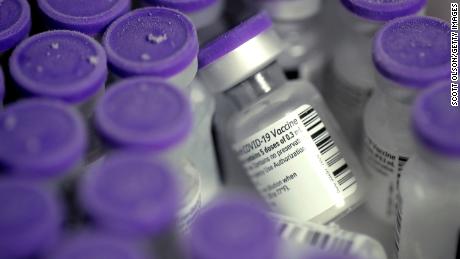
Indeed, the perception of risk is a major explanation of why some people are less likely to be vaccinated, according to polling from the Kaiser Family Foundation.
“(Older adults) are more mindful of their mortality and their risk, and perhaps there’s a sense among younger cohorts that ‘I’m young so I’ll be fine,'” Farrell said.
Access to the medical system
Even though the Covid-19 vaccines are all free, having health insurance is correlated with higher vaccination rates — and most Americans over 65 are eligible for insurance through Medicare.

The underlying idea is that people with health insurance, no matter the age, have access to the medical system. They are more able to get preventative care and more likely to have a personal doctor or health care professional they trust.
“Even though you don’t have to have insurance to get vaccinated, it’s kind of a marker of your attentiveness to the health system and how well you’re plugged into it,” Hotez said.
Medicare beneficiaries also have the right to free annual wellness visits, as do most other people covered by federally qualified health insurance plans. Farrell said he uses these to discuss broader health issues rather than acute problems.
“What this enables patients to do is to take a step back and look a little more comprehensively at their health,” he said. “(They can) be less concerned about cost and more concerned about engaging and taking a deeper dive into preventative care.”
That access to physicians also enables closer trust in the opinions of medical experts.
“One of the most important factors in getting people vaccinated is just that they trust their physician, and that longitudinal relationship is incredibly important,” Farrell said.
Misinformation is targeted at young people
Finally, the anti-vaccine misinformation that has proliferated in this pandemic has generally not targeted the fears of older adults.
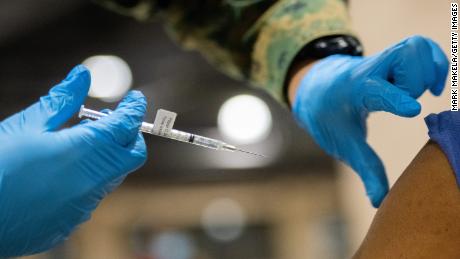
“There is currently no evidence that any vaccines, including Covid-19 vaccines, cause fertility problems in women or men,” the CDC says on its website.
“Most of the anti-science, anti-vaccine aggression and disinformation was specifically targeting young adults and their kids,” he said. “That’s where the messaging was directed at and that’s why you see the vaccine uptake so low.”
Fear of side effects is not as big of a deal, and Farrell noted that some of his patients cited the famous, though perhaps outdated, quote from the late actress Bette Davis: “Old age ain’t no place for sissies.”
“They’re used to some aches and pains,” Farrell said. “They are seasoned patients who have seen this before, at least in a different way, and for many patients … They just can roll with it. They’re like, ‘In the grand scheme of things, this is a pretty minor annoyance at most for the large benefit we’re going to receive.'”
CNN’s Sandee LaMotte contributed to this report.