
After more than a year of trauma and heartbreak, state and local officials are pointing to an end point — a return to the normalcy we’ve craved for months — that they say is just around the corner.
But is it? And more importantly, what will it look like? And how will we know we’re there?
“The reality is that we’re not going to know when we’ve crossed that mythical finish line,” said emergency physician Dr. Megan Ranney, director of the Brown-Lifespan Center for Digital Health. “It’s not like we’re going to suddenly be done.”
So, while the phrase may have caught on, it’s not so much some kind of “finish line” but rather a gradual return to normal, experts say.
“Think about it more as a dial and not like an on-off switch, the way that we should have thought about reopening in the first place,” emergency physician and CNN medical analyst Dr. Leana Wen said.
Even if there’s no precise endpoint to look to, there are several important benchmarks in that gradual return to normalcy.
The role that vaccinations can play
Wen says there is a personal finish line Americans can look forward to — their own vaccinations.
“I would argue for the approach of when you are fully vaccinated, that’s when things get back to much more normal for you,” she told CNN. “That way there’s actually a timeframe that you can literally see for yourself.”
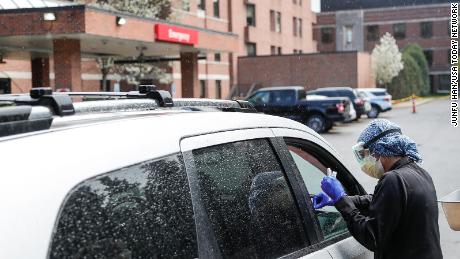
“I think that instead of having a societal, ‘when is it fine to go back to normal,’ we can have a personal one,” Wen said.
That personal vaccination, allowing individuals to begin releasing some of their own restrictions, is the first step in a three-part process of returning to normal, Ranney says.
The second goalpost is the vaccinations of all those around us — family members and friends.
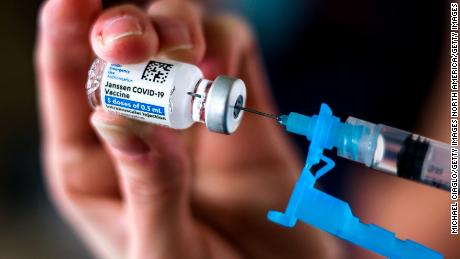
“And then the third part is your community,” Ranney added. “The more that your community is vaccinated, the more protected you are. So going to concerts or indoor restaurants or to bowling alleys or to the movie theater without a mask becomes much safer once you have a larger percentage of people around you vaccinated.”
When could we reach that goal? Some say by summertime.
“By the time we hit 80-85% of the US population vaccinated, what that means is we likely might halt virus transmission or dramatically reduce virus transmission,” said Dr. Peter Hotez, dean of the National School of Tropical Medicine at Baylor College of Medicine. “And what that would mean is — what I think — people could more or less get back to life like it was in 2019, maybe with some differences.”
“So we’ll get back to ball games and concerts and we’ll become pretty close to a normal quality of life by the summer, that’s why we have so much to look forward to,” he said.
What about case numbers?
Experts say it’s hard to pinpoint an exact number of Covid-19 cases that would signal a “finish line.” The US is currently averaging more than 59,000 new cases daily.
“Are we going to say, is it going to be (when we have) less than 10,000 cases (in the US)?” Wen said. “But then, what if we have cases but people are not getting sick? So would we be able to accept 20,000 cases but very few people in the hospital?”
“I don’t think it’s going to be a precise number,” he said. “But we’ll know it when we see it. It’ll be obvious as the numbers come down rather dramatically.”
“And when they do, we’re going to wind up getting really, stepwise, much, much more toward what we consider approaching a degree of normality, which everyone really quite dramatically notices it,” Fauci added.
But it’s not like new cases, hospitalizations or deaths are just going to disappear, Ranney says — and that’s not what the country can realistically aim for.
“What we’re aiming for is protection, for certainly the most vulnerable, but then ideally for the rest of us as well and giving people the ability to go out and about in their normal life… with no more risk than they experienced in pre-Covid times,” she said.
Finish lines will be different for different communities
With different vaccination levels and different Covid-19 case patterns, communities will likely be able to safely lift measures at different times.
“There are different sections of the country that have different dynamics of infection,” Fauci said, speaking on CNN on Wednesday.
“If a particular region is really, really very low and doing really, really well, certainly I think there’s going to be a differential in being able to say one can do certain things or not,” he added.
Does a return to normal mean an end to masks?
Ranney says she foresees most states will lift all outdoor mask mandates in five to six weeks’ time and most indoor mandates will be lifted by mid-summer.
But does that mean you should throw out your masks?
Well, no. Here’s why.

And even when we do lower Covid-19 cases nationwide and reach widespread levels of protection, we could see infection numbers surge again in the winter.
And its likely masks will continue to be encouraged in crowded, indoor spaces, as well as on public transportation, when it’s hard to tell who around us may not be vaccinated, Ranney added.
What could delay our return to normal
While many experts say they feel optimistic about where the US could be just several weeks from now, there are still some factors that could delay a return to normalcy.
The first is vaccine hesitancy.

And then, there are dangerous variants that are circulating — and will likely continue to mutate the more the virus spreads across the country and across the world. While the Covid-19 vaccines that are being administered in the US appear to work effectively against current coronavirus strains of concern, further mutations could pose a problem. As more people are vaccinated, there are fewer opportunities for the virus to transmit and mutate.
“That gives me hope,” Ranney said. “So even if there is some new variant that the vaccine doesn’t fully protect against or that the current formulation of the vaccine doesn’t fully protect against… we’ll have new options, which will protect us.”
Bottom line: We may not be able to predict the finish line, but whatever it is, it gets closer and closer with every Covid-19 shot administered.