
The six cases were among about 6.8 million Americans who have received the single-shot Johnson & Johnson vaccine.
All six cases were among women between ages of 18 and 48, and symptoms occurred 6 to 13 days after vaccination, the CDC and FDA said.
“I know there are people who have gotten the vaccine who are probably very concerned. For people who got the vaccine more than a month ago, the risk to them is very low at this time,” said Dr. Anne Schuchat, principal deputy director of the CDC.
“For people who recently got the vaccine within the last couple of weeks, they should be aware to look for symptoms. If you received the vaccine and develop severe headaches, abdominal pain, leg pain or shortness of breath, you should contact your health care provider.”
In an email sent to states and public health jurisdictions, the CDC instructed vaccinators to hold any Johnson & Johnson Covid-19 vaccine until further instructed.
The CDC says in the email that approximately 220,000 J&J doses were expected to be delivered on Tuesday. According to the CDC, that supply should be stored between 2 and 8 degrees Celsius, and lots are to be labeled “Do not use. Awaiting guidance.”
In addition to reiterating to not use the vaccine, the CDC told vaccinators in the email that unfilled orders of J&J vaccine would not be immediately filled, and no new orders would be accepted.
The email, reviewed by CNN, was received by someone involved in the national vaccination effort.
The CDC said it will meet with the Advisory Committee on Immunization Practices (ACIP) on Wednesday to further review the six cases and assess their potential significance.
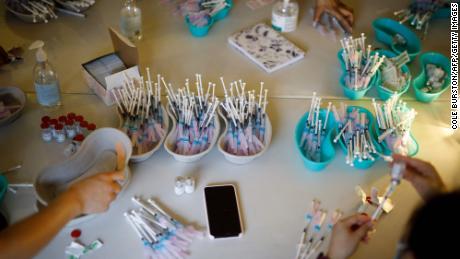
Pause shows system works, NC official says
Several states have directed vaccine providers to pause the use of Johnson & Johnson vaccines while also keeping those vaccines in the proper conditions.
North Carolina’s top doctor said the pause is evidence of how well the system works.
“Today’s announcement shows that we have a robust safety system in place and that that system is working to identify any concerns,” said Dr. Mandy Cohen, secretary of the state’s Department of Health and Human Services.
In New York, everyone with Tuesday appointments for Johnson & Johnson vaccines a state mass vaccination sites will be given the Pfizer vaccine instead, the state health commissioner said.
The New Jersey health department will work with all vaccination sites to help reschedule appointments and make arrangements to give one of the other two vaccines, the state health commissioner said.
Both CVS and Walgreens will also stop giving the Johnson & Johnson vaccine for now, representatives for the pharmacy chains said.
In Virginia, Gov. Ralph Northam was at a middle school where 1,100 people were scheduled to get shots over two days.
“Our team here, switched over with the help of Walgreens, to the Pfizer vaccination,” said Northam. “We will await the guidance from the FDA and CDC regarding J&J. Hopefully, this is just a small setback that we will overcome.”
This means the company will deliver 220 million doses by the end of next month, Bourla said — which is 20 million more than previously expected.
Don’t get lax — hospitalizations keep rising
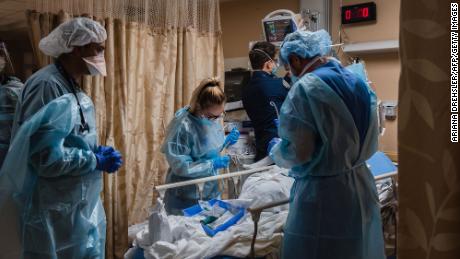
“Don’t declare victory prematurely,” said Dr. Anthony Fauci, director of the National Institute of Allergy and Infectious Diseases.
“We see so many pulling back on some of the public health measures: the mask mandates, the restaurant opening, the bars. We can’t be doing that. We’ve got to wait a bit longer until we get enough vaccine into people that we will clearly blunt any surge.”
If the US keeps vaccinating quickly and doubles down on safety measures, it could soon see a “turnaround,” Fauci said.
To try to get out of this pandemic, “it’s still about masks and physical distancing and ventilation and vaccines,” said emergency physician Dr. Megan Ranney, director of the Brown-Lifespan Center for Digital Health in Rhode Island.
“The current vaccines work really well against B.1.1.7.”
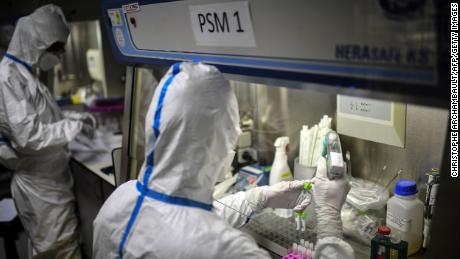
In New Jersey, where there are more than 950 cases reported of concerning variants, patients on ventilators and virus-related deaths have increased, state health commissioner Judy Persichilli said Monday.
About 48% of the state’s new hospitalizations were people under the age of 60, she added.
US is on track to hit a key vaccination milestone
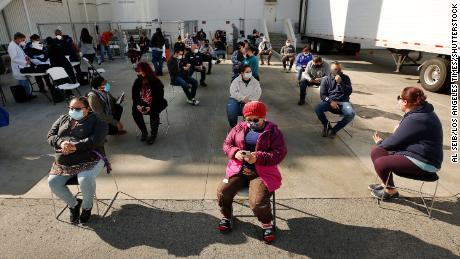
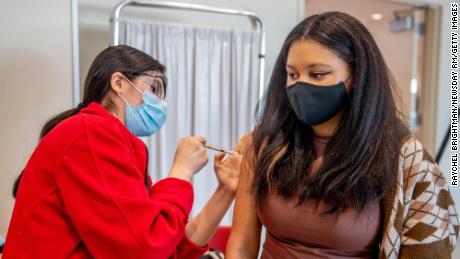
The US is on track to reach half of the US adult population with at least one dose by the end of the week, according to a CNN analysis of CDC data. As of Tuesday, 47% US residents have gotten their first shots.
At least 11 states have already reached that threshold: Connecticut, Maine, Massachusetts, Minnesota, New Hampshire, New Jersey, New Mexico, Rhode Island, South Dakota, Vermont and Wisconsin.
In Kentucky, Gov. Andy Beshear announced a new “Team Kentucky Vaccination Challenge,” saying that when 2.5 million residents have received at least their first dose of a Covid-19 vaccine, the state will remove most of its capacity restrictions.
“That minimum time frame might not be realistic, but we should get there in four to six weeks if we are intentional.”
“We have to try everything to reach this point as quickly as possible. That will help us have a more normal summer than any of us could have imagined this winter,” the governor added.
More universities will require vaccine proof
Johns Hopkins University, in Maryland, is the latest to join the list.
All students who plan to be on campus will be required to be vaccinated unless they have a medical or religious reason not to be and faculty are also strongly recommended to be vaccinated, although it will not be required for them, according to an announcement sent to the campus community on Friday.
“Our plans are predicated on continuing public health strategies to promote a safe campus and community,” Johns Hopkins University President Ronald Daniels and other university leaders wrote.
“Ensuring that the overwhelming percentage of our community’s population is vaccinated will greatly reduce the risk of the virus’s spread on our campuses and will also protect our neighbors in Baltimore,” they added.
By CNN’s count, there are at least 18 colleges and universities in the US that will be requiring Covid-19 vaccines.
CNN’s Michael Nedelman. Nadia Kounang, Chris Boyette, Jacqueline Howard, Deidre McPhillips, Elizabeth Stuart and Jennifer Henderson contributed to this report.