
The scaleback comes as eight states — all in the Northeast — have fully vaccinated more than half of their residents against Covid-19, according to data published Wednesday by the US Centers for Disease Control and Prevention.
The states that have vaccinated more than half their populations are Connecticut, Maine, Maryland, Massachusetts, New Hampshire, New Jersey, Rhode Island and Vermont.
Some health officials are calling the scaleback premature, and the National Association of County and City Health Officials urges daily Covid-19 data tracking to continue.
“As far as I know, we’re still in a public health emergency as a country,” Lori Tremmel Freeman, the association’s chief executive officer, told CNN on Wednesday. “That has not been downgraded yet.”
Most of those states have scaled back to five updates each week; Alabama and Kansas have dropped down to three times a week and Florida to only once a week, according to Johns Hopkins University.
“Real-time public health data is the most powerful weapon against a pandemic,” Beth Blauer, executive director of the Johns Hopkins University Centers for Civic Impact, wrote in a blog post published Monday. “The rollback of reporting frequency indicates that many states do not see this past year of investment in data infrastructure and public data reporting as a permanent fixture.”
The daily tracking of Covid-19 data should continue until either the nation’s declaration of being in a public health emergency ends, or the nation reaches herd immunity, Freeman said. The United States is still trying to get people vaccinated, Freeman said, so it will be important to compare vaccination rates against other Covid-19 data, such as cases, hospitalizations and deaths.
“An ultimate goal is to get to the point where even those who remain unvaccinated are at far less risk — and nobody that I know has really landed on that number,” Freeman said about herd immunity.
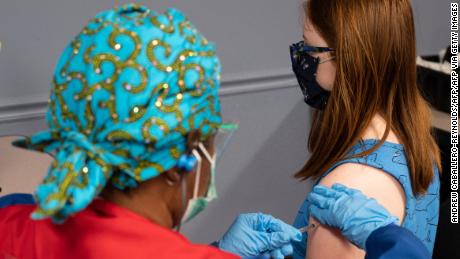
Biden’s administration is still trying to incentivize vaccinations across the country. One such effort includes the Centers for Medicare & Medicaid Services (CMS) announcing it will pay providers a little extra money to administer vaccines at home for those who have difficulty leaving their home.
“There are approximately 1.6 million adults 65 or older who may have trouble accessing COVID-19 vaccinations because they have difficulty leaving home,” the CMS statement read.
CMS will be adding an additional $150 to providers for two-dose vaccinations at $75 per dose, the CMS statement read.
Experts push vaccines to fight variants
“We cannot let (Delta’s spread) happen in the United States,” Dr. Anthony Fauci said Tuesday in a White House Covid-19 briefing, adding it’s “such a powerful argument” to get vaccinated.
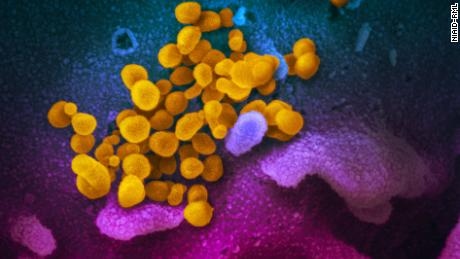
“There is reduced vaccine effectiveness in the one dose,” Fauci said. “Three weeks after one dose, both vaccines, the (AstraZeneca) and the Pfizer/BioNTech, were only 33% effective against symptomatic disease from Delta.”
Researchers with Johnson & Johnson revealed Wednesday the vaccine generates an immune response against some of the more common and worrying variants of the virus.
Its effects seem to be a little reduced against the Beta variant first seen in South Africa and the Gamma variant that spread rapidly across Brazil, but the immune response appeared fully effective against the Alpha variant first seen in Britain and a variant identified in California.
Fauci added that variant-specific boosters may be on the horizon.

Even those who’ve already had coronavirus should get vaccinated because research shows immunity achieved through vaccination is better than immunity through previous infection, Fauci said.
Meanwhile, the United States has averaged almost 14,380 new Covid-19 cases a day across the past week — the second-lowest average since March 28, 2020, according to Johns Hopkins University data. Only Friday’s average — 14,328 per day — was lower.
And the average number of new Covid-19 hospital admissions per day across a week — just more than 2,200 — is far lower than the country’s peak average of 16,500 a day on January 9, CDC Director Dr. Rochelle Walensky said Tuesday.
But health experts warn that a recent lag in vaccination rates leaves millions unprotected against Covid-19 variants that have made their way to the US from other parts of the world.
Over the past week, the US averaged more than 1.07 million Covid-19 vaccine shots administered per day — well below the peak seven-day average of 3.38 million shots per day reached on April 13, according to CDC data.
Vaccine maker says it is working to extend shelf life
Johnson & Johnson — maker of the only single-dose Covid-19 vaccine authorized in the US — says it is working to extend the shelf-life of its product amid reports that doses in the country may expire before they’re used.
Of the 21.4 million Johnson & Johnson doses delivered in the US, about 11 million have been administered, according to CDC data. That vaccine can be stored for as long as three months at refrigerator temperatures.
Potentially expiring coronavirus vaccines make up 1-2% of vaccines distributed to states, a source familiar with the federal vaccination effort told CNN Wednesday.
As states report hundreds of thousands of Johnson & Johnson vaccine doses are set to expire, they are seeking ways to utilize them.
“It is an issue that there are expiring doses — I would imagine in every state. However, it’s a very small percentage of the overall doses that have been sent to providers — probably 1-2%,” the source said.
The US Food and Drug Administration is looking into whether the expiration date on Johnson & Johnson vaccines can be extended and, if so, how to get the doses utilized, Fauci said Wednesday.
Johnson & Johnson is conducting stability testing “with the goal of extending the amount of time our COVID-19 vaccine can be stored before expiry,” it told CNN this week.
In Ohio, 200,000 doses of the state’s Johnson & Johnson vaccine are set to expire before the end of the month, and the state is unable to share the doses with other states or countries, Gov. Mike DeWine said this week.
Correction: An earlier headline and version of this story incorrectly characterized the latest seven-day average of new daily US coronavirus cases as the lowest since March 2020; it is the second lowest since March 28, 2020. An earlier version also incorrectly stated the latest seven-day average of vaccine shots administered per day.
CNN’s Hollie Silverman, Holly Yan, Amir Vera, Deidre McPhillips, Lauren Mascarenhas, Ryan Prior and Carma Hassan contributed to this report.