
First, they must continue getting their shots, he said. Second, they must avoid declaring victory prematurely and putting aside the methods that helped bring down cases before a recent rise.
“We see pulling back on so many of the public health measures, the mask mandates, the restaurant opening, the bars. We can’t be doing that. We’ve got to wait a bit longer,” he told CNN’s “The Situation Room with Wolf Blitzer.”
Fauci, the nation’s top infectious disease doctor and chief medical adviser to President Joe Biden, said that if the US keeps a pace of 3 to 4 million vaccination shots per day, “pretty soon we’re going to see a turnaround.”
When asked to give a baseball metaphor for where the US stands in the battle against Covid-19, Fauci said there is no apt comparison.
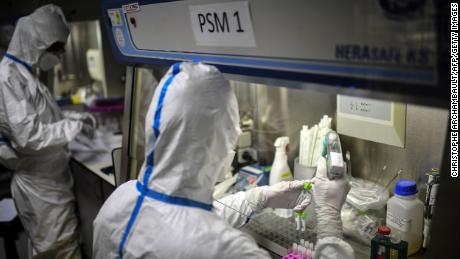
“It’s not like baseball, Wolf, because the inning that we’re in is going to depend on how we respond,” Fauci said. “If I say we’re in the seventh inning, it’s almost over, and we have surges like we’re seeing throughout Europe and the rest of the world and the threat of a surge that we’re seeing now … It’s not measured in innings anymore.
“It’s measured in what we do to contain this.”
US needs to address vaccine hesitancy, expert says
Some experts say the US could beat another potential surge in the coming weeks if Americans hold on a little longer and continue to practice safety measures while more of the population is vaccinated against the virus.
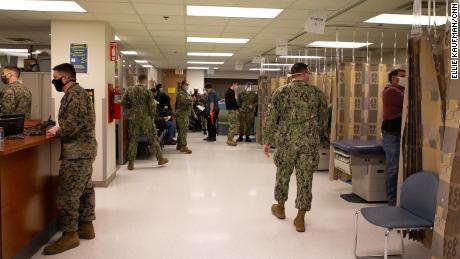
Among US adults, nearly 46.5% have received at least one dose of vaccine and 28.6% are fully vaccinated, the CDC said. If vaccinations continue at the current pace, the US sometime this week will likely hit a milestone of half of adults having received at least one dose of vaccine.
“The way to do that is to vaccinate like crazy,” he said.
About 4.6 million doses were administered Saturday, the highest number of doses reported administered in one day. Over the past week, more than 3.1 million doses of vaccine have been administered each day on average, according to the CDC.
But there are challenges ahead.
“The last 20 to 30% are going to be the hardest because a lot of folks in this country are still hesitant to get the vaccine. We’re seeing it all over the country,” Reiner said. “We need to really get down on the grassroots level, talk to people about their hesitancy and get shots into arms.”
“Because if we don’t vaccinate that last 30% or so, we’re still going to have to live with this virus for a very long time.”
White House announces new mass vaccination site in Oregon
The Biden administration outlined new steps Monday to continue to increase vaccinations.
The administration announced a new federally supported mass vaccination center in Oregon, part of its continued efforts toward promoting vaccine equity. It also announced other steps toward getting more shots in arms.
“We’re excited to announce today a new federally-run mass vaccination site in Central Point, Oregon,” White House senior Covid-19 adviser Andy Slavitt said at a Covid briefing, noting that President Joe Biden had set a goal on March 29 of adding a dozen such sites by April 19.
“We are on track to meet the President’s goal this week, ahead of schedule. And by next week, we will have opened a total of 36 mass vaccination sites with a combined capability of administering 124,000 shots per day,” Slavitt said.
Michigan’s surge warning for other states, expert says
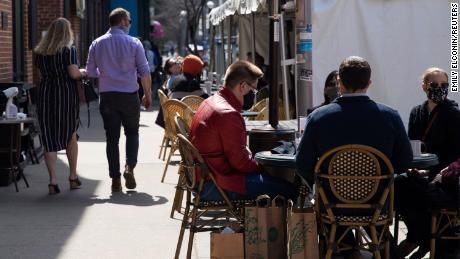
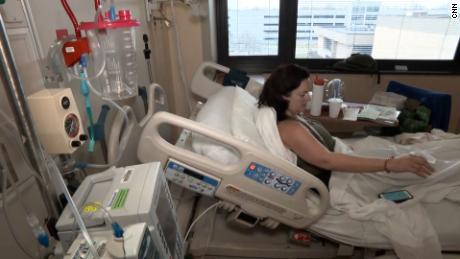
Gounder said the variant is causing a surge in cases and the state is seeing more people in their 30s, 40s and 50s getting sick and being hospitalized.
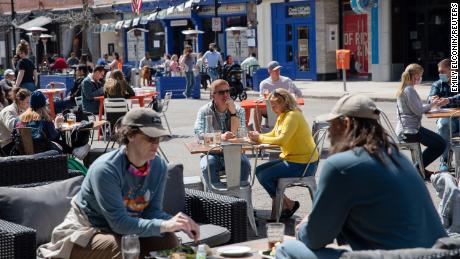
Michigan’s surge is a combination of two factors, Gounder says: the spread of the B.1.1.7 variant combined with people relaxing on mitigation measures before enough residents are vaccinated.
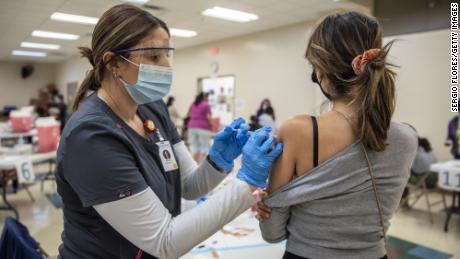
Here’s why: It takes about two weeks after the Pfizer and Moderna second doses or the Johnson & Johnson one-dose vaccine before people are immune.
“When you have an acute situation — extraordinary number of cases like we have in Michigan — the answer is not necessarily to give vaccine. In fact, we know that the vaccine will have a delayed response. The answer to that is to really close things down,” Dr. Rochelle Walensky said during a virtual White House briefing on Monday.
“I think if we tried to vaccinate our way out of what is happening in Michigan, we would be disappointed that it took so long for the vaccine to work, to actually have the impact.”
And Gounder told CNN, “The incubation period (for the virus), which is the time from when you are exposed to when you are infected with coronavirus, is four to five days.”
“So there is no way that a surge in vaccination is going to help curb this when transmission is happening right now,” she said. “The hard truth is that the only thing that will curb transmission right now are measures that take effect immediately.” For example, masking up, not dining indoors, and socializing outdoors, she added.
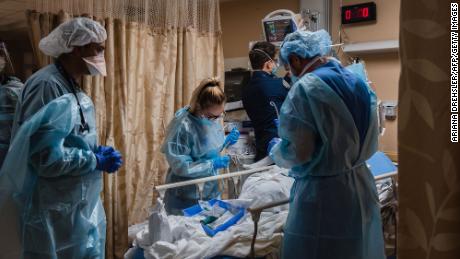
“Hospitals are being inundated,” Reiner told CNN. “Michigan needs to shut down.”
But he added the government should send more vaccines to the state.
“Think about it this way: Every year during fire season, when forest fires get out of control, we don’t just leave the states to manage as best they can. We surge firefighting forces into those states. So Michigan is on fire now. And we need to put that out,” he said.
Other state leaders alarmed
But it’s not just Michigan.
Ohio Gov. Mike DeWine said the state was seeing rising Covid-19 cases, hospitalizations and ICU admissions and urged residents to get vaccinated to avoid another surge.
“This is a race,” he said. “We are in a race. And it’s a life-and-death race.”
CNN’s Jacqueline Howard and Anna Sturla contributed to this report.