
Why not make human milk in a lab?
As improbable and far-fetched — and maybe even blasphemous — as it may seem, scientists are working on doing just that. More than that, some are predicting the final product will be available in three or four years.
“Startups are racing to reproduce milk in the lab,” said Massachusetts Institute of Technology.
And for good reason. As startling as it may seem, there’s never been enough human milk in the world to feed all the world’s babies until they’re 6 months old, said Shayne Giuliano, CEO of North Carolina based 108Labs.
How can that be? Well, it actually starts at the beginning when babies are born. According to the World Health Organization, breast milk is the most effective way to ensure a child’s health, and even survival. In short, the ideal food for infants.
“It is safe, clean and contains antibodies, which help prevent against many childhood illnesses,” says WHO.
The American Academy of Pediatrics (AAP) recommends that infants be exclusively breastfed for about the first 6 months with continued breastfeeding while introducing appropriate complementary foods for 1 year or longer.
The World Health Organization also recommends exclusively breastfeeding up to 6 months with continued breastfeeding along with appropriate complementary foods up to 2 years of age or older.
Good advice, but nearly two out of three infants are not exclusively breastfed for the recommended 6 months.
As an example of that, according to the Australian Bureau of Statistics, which covers the 2017-18 financial year, only 29 percent of 6-months-old babies were exclusively breast fed.
 Globally, three in five babies are not breastfed at the first hour of life. Giuliano suggests this is a problem that cell-cultured milk can help solve.
Scientists have found that breastfed babies have fewer infections and hospitalizations than formula-fed infants. That’s because during breastfeeding, antibodies and other germ-fighting factors pass from a mother to her baby and strengthen the immune system. This, in turn, helps lower a baby’s chances of getting many infections, among them meningitis, pneumonia, diarrhea, and ear and respiratory infections.
But, for various reasons, such as a medical condition or medications they’re on, some women can’t produce enough milk for their babies. Malnutrition can also be a factor. Or an infant can be allergic to milk. Then, too, adoptive parents can’t breast feed their adopted babies. And men, or relatives or friends, who are the sole caretakers of a baby, perhaps because the mother has died, can’t either. Bottomline, producing milk can only happen when a mother gives birth.
Options other than human breast milk
What about cow’s milk? According to the Centers for Disease Control and Prevention feeding a children younger than 12 months old cow’s milk may put them at risk for intestinal bleeding. It also has too many proteins and minerals for babies’ kidneys to handle and does not have the right amount of nutrients babies need.
Or, as has often been said: cow’s milk is for cows; human milk is for humans.
Infant formula immediately comes to mind as an option to human breast milk. And it has a long history.
In 1865, when Justus von Liebig developed, patented, and marketed an infant food — first in a liquid form and then in a powdered form for better preservation — women were finally “freed” from breastfeeding, which many in the developed world saw as “uncivilized and something that peasants in poor countries did.”
Liebig’s “formula,” consisting of cow’s milk, wheat and malt flour, and potassium bicarbonate, was considered the perfect infant food, according to an article about the history of infant feeding in The Journal of Perinatal Education.
Since then, families have a range of formulas to choose from, including some made with soy instead of milk. But researchers quickly discovered that formula, as convenient as it was, came with some attendant problems.
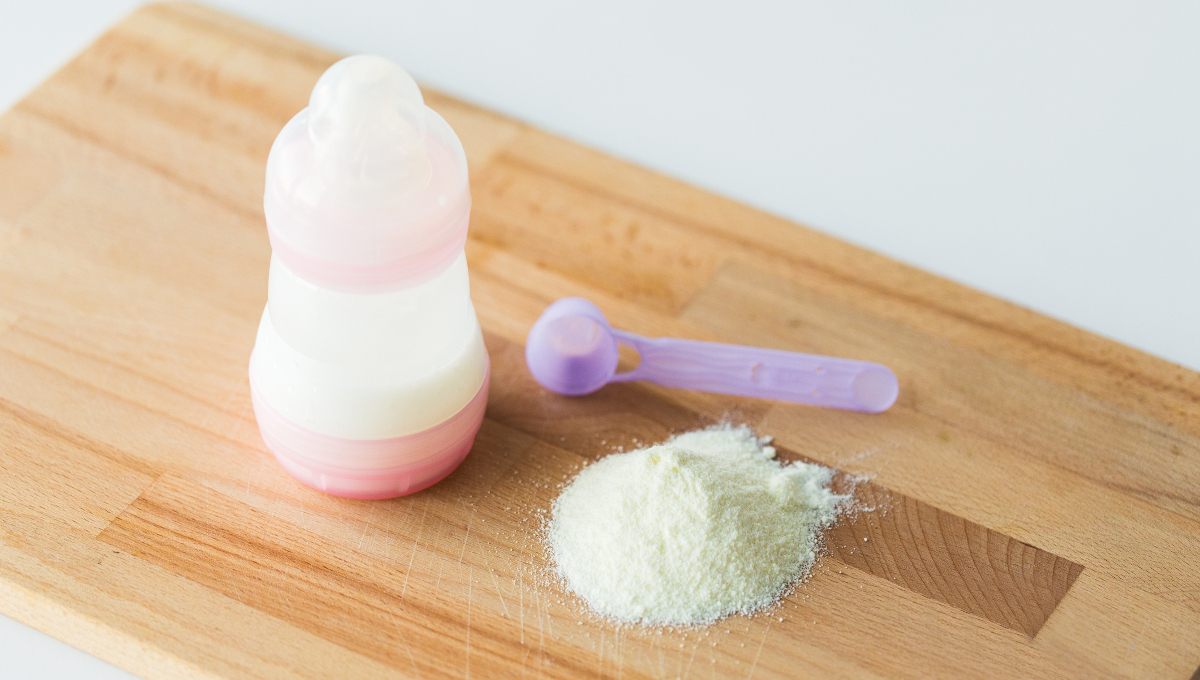 According to the World Health Organization, infant formula does not contain the antibodies found in breast milk.
“The milk proteins, including antibodies, in human milk protect babies,” said Giuliano. “It’s that simple. Until babies can develop their first antibodies and microbiome and full immune system by around 6 months, they’re vulnerable to infections and serious health problems.”
Another consideration comes into the picture. When infant formula is not properly prepared, there are food-safety risks arising from the use of unsafe water and unsterilized equipment, or the potential presence of bacteria in powdered formula.
That was the apparent case in a recent recall of infant formula from Abbott Laboratories in Sturgis, MI, where inspectors found, among other things, a failure to make sure clean-in-place conditions were maintained and monitored. Some babies became infected with cronobacter, germs that can live in dry foods, such as powdered milk formula. Tragically, two of the infants died.
Times have changed since Liebig’s times, and parents now have a range of formula products to choose from. But none of them are as healthy as human milk, according to some experts. Even so, said Giuliano in an interview with Food Safety News, they can be important sources of nutrients for babies who don’t have access to human milk. And they have even saved babies’ lives when no human milk is available.
But that doesn’t mean that scientists like Giuliano aren’t working on producing cell-cultured breast milk — breast milk made in a lab. Those who are involved in this believe it will be healthier than conventional formula and therefore better for infants.
“We’re not anti-formula,” he said. “Formula was created to give mothers an option. “But the world has changed. The future will be different. The option of human milk is now possible. Unlike meat and cow’s milk, which you can buy in stores and restaurants, human milk has never been broadly available. Yet human milk is the most important and least accessible food on earth.”
In 2019, 108Labs created the first cell-cultured milk. The next year, it announced work on Colostrupedics, whole-human infant formula. Today it’s building the first milk Cellufacturing® facility.
 Long term, the company’s goal is to replace bovine milk for infants globally with human milk by 2040.
“Mothers deserve this,” said Giuliano. “They’ve been working around the clock for millions of years to keep us alive.”
Several other companies are working on this challenge as well, although no one can say when exactly their products will be available. Three to four years is their best guess. However, private investment is growing rapidly, as well as interest among university-based researchers.
Among those closest to releasing a product into the marketplace are US-based 108Labs, US-based BIOMILQ, Israeli Will (formerly BioMilk), and US-Singporean Turtle Tree Labs.
“We’re a step closer to empowering parents with another infant-feeding option, one that provides much of the nutrition of breastmilk with the practicality of formula,” said cell biologist Leila Strickland, who, with CEO Michelle Egger, a food scientist, founded BIOMILQ.
In an article in Food Navigator, Strickland pointed out that cell-cultured milk is not designed as a replacement for breastfeeding. But it does offer a better option than soy or cow’s milk for the four-fifths of women who start feeding their infants formula before the six-month period recommended by WHO and other health organizations.
The partners said they can now confirm that BioMILQ’s product has macronutrient profiles that closely match the expected types and proportions of proteins, complex carbohydrates, fatty acids and other bioactive lipids that are known to be abundantly present in breastmilk.
They also make it clear that their product “gets as close to the real thing by essentially replicating the mammalian milk production process.”
“Put simply,” they say, “this takes cells from mammalian mammary glads, keeping them happy so they proliferate, and then triggering them to differentiate and start producing milk. Those cells are mini-factories that churn out milk”
BIOMILQ won’t be identical to mothers milk, and the founders say they’re not confident it can be.
 For example BIOMILQ’s milk won’t contain immunoglobulins, proteins that are made by person’s immune system after exposure to an antigen — something harmful to your body that causes an immune response. Immunoglobulins fight off germs, illness, and disease. They circulate throughout the body and can be found in blood, sweat, saliva and breast milk.
Yet the founders told Food Navigator that BIOMILQ’s milk contains the full complement of human milk oligosaccharides, which provide health benefits, to infants, as well as other bioactives that will support immune development, microbes population, intestinal maturation, and brain development in ways that cow-based infant formula fundamentally cannot.
Bottomline, say the founders, BIOMILQ is not bio-identical to breastmilk, but it’s significantly closer to it than any infant formula currently on the market.
You won’t need cows
Referring to what he calls a “paradigm shift that’s on its way,” food-tech entrepreneur Zoltan Toth-Caifa of Real Deal Milk, founded in 2021, even goes so far as to predict that this century is going to be about cellular agriculture — and in the case of milk and milk products “you won’t need cows.”
His company is going forward on the belief that cellular agriculture will beat traditional alternatives everywhere. And he predicts his company’s cheeses will be on the market in the next several years.
In the case of cellular agriculture, a process known as precision fermentation is used to make milk proteins. It can use DNA from a database that goes into microorganisms to “grow” them into cow-free milk proteins, but without needing a cow to do this. From there, the proteins can be used to make milk, cheese, yogurt, cream cheese and even ice cream — all of which are identical to the original dairy products — have been made in a lab.
It can also be made to produce human milk and human-milk formula.
It’s important to note that while precision fermentation, can make meats and even fish without the actual animals or fish, except for taking some small biopsies from them, it is different from making plant-based meats, which are made from plants. And the animals/fish don’t need to be killed to get the biopsies, something that appeals to people who disdain what they see as inhumane treatment of animals.
The biggest challenge yet
Not surprisingly, human milk is not a simple formula but rather made up on an optimum balance of water, carbohydrates, fats, proteins and micronutrients as well as some maternal immune cells, stem cells’ antibodies, and even healthy bacteria that can benefit an infant’s gut.
“Science has made impressive gains in the art of producing animal products minus the the animal, said Ruth Purcell, a consultant for Nourish Ingredients, a company working with Cellular Agriculture, Australia, and Bianca Le, the founder and executive director of Cellular Agriculture Australia. “Now this emerging field is taking on its biggest challenge yet: breastmilk.”
When it comes to food safety, Giuliano suggests that the Food and Drug Administration has avoided having strong public opinions that would regulate or discourage informal breast milk sharing networks, and this relative silence speaks volumes to the importance of human milk in newborn health because human milk saves lives.
“While any raw mammalian milk could be considered potentially unsafe for consumption due to microbes present in all naturally produced milk, science and instinct clarify that the benefits of raw human milk outweighed the risks because there was nothing truly comparable to human milk in modern medicine or nutraceuticals until now with the dawn of cell-cultured human milk,” contends Giuliano.
The FDA recommends that if, after consultation with a healthcare provider, a person decides to feed a baby human milk from a source other than the baby’s mother, she or he should only use milk from a source that has screened its milk donors and taken other precautions to ensure the safety of its milk.
The agency also points interested people to the Human Milk Banking Association of North America (HMBANA), a voluntary professional association for human milk banks. This organization issues voluntary safety guidelines for member banks on screening donors, and collecting, processing, handling, testing and storing human milk.
But even with human milk banking supporting the most vulnerable newborns in hospitals, Giuliano suggests that cell-cultured human milk can bridge the gap to feed all babies human milk until 6 months old to create the first true surplus of human milk in human history.
“It’s so valuable and so life-saving,” he said.
The future
When talking about his work in this field, Giuliana readily admits he’s “hooked.”
“Now it’s a responsibility,” he said about continuing on with this. “I can’t quit. It’s gone too far to walk away from it.”
What about the cost?
The scientists working on this agree that currently cost is a major hurdle, especially since they want the human-milk formula to be affordable and accessible. As such, they’re strategizing how to cut costs so the milk won’t be more expensive than formula.
The cost of baby formula across popular brands can average between $1,200 and $1,500 during a baby’s first year, according to the U.S. Surgeon General.
Giuliano said that beast milk substitutes is one of the fastest growing food segments when looking at the compound annual growth rate.
With a value of $24.3 billion in 2018, Allied Market Research estimates the global infant nutrition market wll grow at a compound annual growth rate of 7.7 percent from 2019 to 2026. At that point, it is estimated to hit $61.6 billion.
“It’s big business,” said Giuliano, predicting that cell-cultured human milk may replace all bovine breast milk substitutes one day.
(To sign up for a free subscription to Food Safety News, click here)