
Yet he added, “it’s obvious that this plateauing and diminution — although you can see it across the country — it is happening more steeply in some parts of the country, the better vaccinated parts, than in other parts of the country, the less vaccinated parts, including my own state of Tennessee. So, although we are clearly making progress, I think we’re still in two Americas.”
What might mark the ‘bookend’ of the pandemic
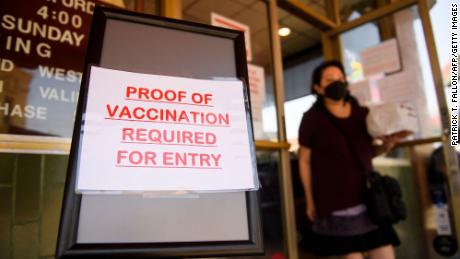
Signs that the United States’ control of Covid-19 could be improving also can be seen in some data around Covid-19 vaccinations.
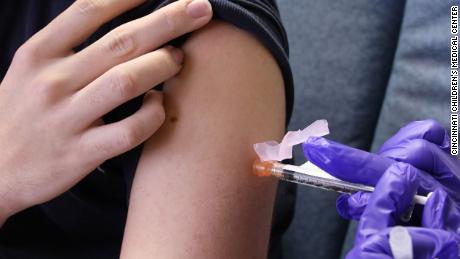
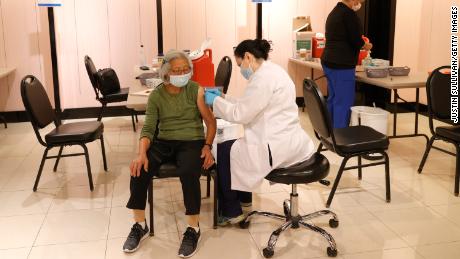
But despite efforts by the federal government and public health officials, there’s been a big drop in the average number of people starting the vaccination process. Data from the US Centers for Disease Control and Prevention shows a more than 40% drop in the number of people getting their first Covid-19 shots over the past two months. The current seven-day average pace of vaccinations is 276,539 people initiating vaccination each day — a 24.5% decline from this metric a month ago, and a 42.5% decline in this number since August 7.
“With vaccinations, we’re going to beat this pandemic finally,” he said. “Without them, we face endless months of chaos in our hospitals, damage to our economy and anxiety in our schools, and empty restaurants and much less commerce.”
“Once again, I think we’ll probably see two Americas: parents in some states more frequently taking their children to the pediatrician to get vaccine than others,” Schaffner said. “But in general, I think the approval of the Food and Drug Administration for the Pfizer vaccine for 5- to 11-year-olds will play a role in accelerating the downward slope of new cases, hospitalizations and deaths.”
He added that “mandates will continue to move vaccinations upwards.”
“Then on the back end of that, we’re going to have, hopefully, a vaccine available for children, and at some point before the end of the year, we probably will have the orally available drug from Merck if things go well and that undergoes a favorable review,” Gottlieb said.
“I think those two things are going to be sort of the bookend on the sort of pandemic phase of this virus,” he said. “And we’re going to be entering the more endemic phase, when this becomes an omnipresent risk but doesn’t represent the extreme risk that it represents right now.”
“But we have some hard realities, especially in this part of the country,” Hotez said.
“Only 33% of the 12- to 17-year-olds were given the Covid-19 vaccine here in the South, in most of the southern states, compared to 80% in the northeast. So once again, you have this geographic divide where parents are holding back on vaccinating their adolescents,” Hotez said. “I have to believe they’ll probably hold back on vaccinating the younger kids as well.”
‘We absolutely do not want to let down our guard yet’
Overall, most experts agree that it remains unclear when the pandemic will end, but it likely will occur when transmission of the coronavirus shifts from pandemic levels to being endemic — when the virus takes permanent hold but circulates at lower levels.
“This virus is not going to just disappear,” Schaffner said.
Some physicians, including Schaffner, remain hopeful that the country may be approaching that transition from pandemic to endemic — but say it’s not quite there yet.
“I think we’ll know it when we see it,” Schaffner said. “Once there is a very low rate, less than 5% of tests that are positive on a daily basis, and once the rate of new cases is very low and sustained over a period of time, I think we will, at that point, know it.”
Schaffner said that’s when he and his colleague will smile “broadly” instead of smiling quietly.
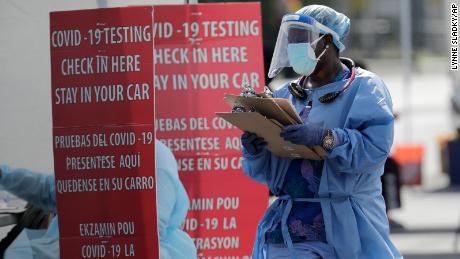
“I’m always nervous to treat Covid as a US phenomenon,” Caplan told CNN Thursday. “It is an international phenomenon. Travel is increasing. The possibility of new strains reoccurring is great.”
For now, “it’s too early” to claim that the United States is reaching that transition point from pandemic to endemic, Caplan said.
“I’ll make this forecast — not this year, not this winter, not until next year will we be talking about this in any serious way,” he added.
“We’re about to go back indoors. We know this disease took off in the winter when people were mingling and gathering more inside in closer quarters in many parts of the US. So I’m not ready to say we’re shifting in our level of disease or incidence of disease or severity of disease. In fact, I worry that message may undercut efforts to push vaccination right now,” Caplan said. “We absolutely do not want to let down our guard yet.”
“I think we’re making some important progress in terms of increasing vaccinations, but the fact of the matter is there are still dangerous gaps in immunity throughout the country and as long as that’s the case, there are still pathways for the virus to spread,” Nuzzo said.
“I’d like to think that the worst is behind us, just given how much we’ve already endured in terms of high numbers of cases but also increasing progress in increasing vaccination. So, I don’t think that a rise in cases in the winter will be as bad as last year’s winter surge, but there’s nothing built into the decline that means that the momentum will be sustained,” she said.
“What we will see is really up to us.”
CNN’s Virginia Langmaid and Naomi Thomas contributed to this report.