
The Food and Drug Administration Wednesday paved the way for a new COVID-19 booster that could be available within days.
The FDA gave emergency authorization to a “bivalent” vaccine that targets both the original virus and the BA.4 and BA.5 variants that now dominate the world.
An advisory committee to the Centers for Disease Control and Prevention is scheduled to meet Thursday to discuss who should receive the boosters. The CDC director will also need to sign off on them before the boosters become available.
As requested by the companies, the Pfizer-BioNTech booster was authorized for anyone ages 12 and up, while Moderna’s vaccine is authorized for adults only. Both were authorized for use at least 2 months after any previous COVID-19 shots.
The companies said they are ready to ship the modified boosters in September. Pfizer has said it has the capacity to provide up to 15 million doses by Sept. 9 from its Pleasant Prairie, Wisconsin, production site.
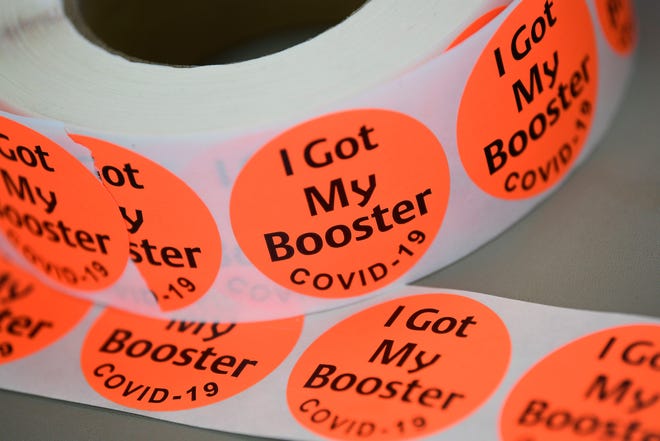
The new shots are not likely to provide a huge benefit over the original vaccine, according to scientists. But any boost in protection is worthwhile, government officials have said.
COVID-19, which still accounts for about 80,000 cases and 400 deaths a day in the U.S., is expected to surge again this fall and winter, as it has in both previous years of the pandemic.
“We see this as the next step to provide broader coverage for a virus that mutates very rapidly,” said Annaliesa Anderson, Pfizer’s chief scientific officer for vaccine R&D. It should prevent both infections and severe disease for a time, but it’s not clear for how long.
Both boosters combine the original vaccine, which targeted the spike protein on the virus’ surface, along with a new formulation that targets the mutated spike protein found on the BA.4 and BA.5 versions of the omicron variant.
“We’re taking out some of the prototype and then adding in some of the 4-5. Otherwise, it’s exactly the same as the original vaccine,” Anderson said.
The original vaccine still works well to prevent severe disease, she said, but the new booster should help reduce the number of infections as well as minimize severe disease. In animal studies there are “nice neutralizing antibody responses” to the booster, Anderson added.
BA.5 now accounts for nearly 90% of all infections in the United States, with BA.4 making up nearly all the rest, according to CDC reports.
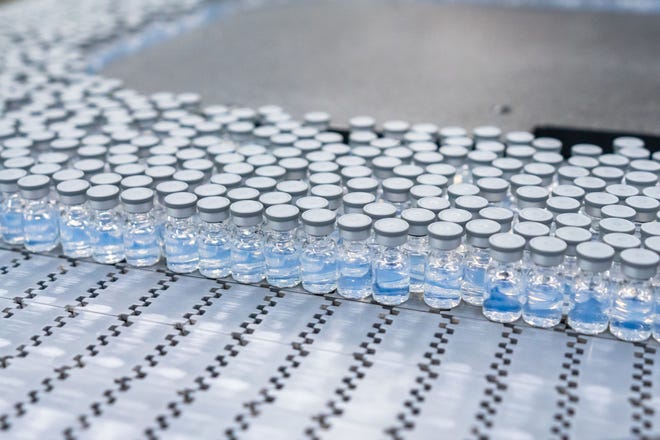
The companies were able to modify the vaccine in less than three months, one of the primary advantages of the mRNA technology that form the basis of both the Pfizer-BioNTech and Moderna vaccines. Moderna’s vaccine is called SPIKEVAX, while Pfizer-BioNTech’s is called Comirnaty.
Dr. Peter Marks, director of the FDA’s Center for Biologics Evaluation and Research, said in a prepared statement that the FDA has extensive experience updating vaccines for annual flu shots. “We have worked closely with the vaccine manufacturers to ensure the development of these updated boosters was done safely and efficiently,” he said. “These bivalent COVID-19 vaccines meet our rigorous safety, effectiveness and manufacturing quality standards for emergency use authorization.”
Andrew Pekosz, a virologist at Johns Hopkins Bloomberg School of Public Health, said he thinks the new boosters will be safe and provide broader protection against omicron variants.
Having a vaccine targeted at BA.5 when that’s the most widely circulating variant, he said, “you can’t get better than this.”
Pekosz suggests people get boosted six months after their last COVID-19 infection or vaccine, though people who are immunocompromised may need more frequent boosts. “Infection should be essentially counted as a booster,” he said.
It’s not clear whether shots will be needed every six months indefinitely, Pekosz said, or whether most people will eventually build up enough immune protection to avoid severe disease and only those at high risk will need to keep boosting.
People can help limit the arrival of new variants by getting vaccinated, he said. Variants are believed to develop within people who struggle to fight off the virus. “The less replication you have, the less likely that a novel mutation will come up.”
Getting vaccinated against both the original and the omicron variants might also help prevent the virus from mutating back toward earlier variants that were more severe, Pekosz added.
Vaccines, testing and antivirals for people who are infected “are the tools that are going to allow us to live with this (virus),” he said.
Dr. Richard Besser, president and CEO of the Robert Wood Johnson Foundation, said he’s concerned that there won’t be enough federal funding available to provide another shot to everyone who wants one. Congress has not allocated money to fight COVID-19 in over a year.
“One’s ability to pay for a vaccine should not determine whether or not someone receives a vaccine,” Besser said.
Contact Weintraub at kweintraub@usatoday.com.
Health and patient safety coverage at USA TODAY is made possible in part by a grant from the Masimo Foundation for Ethics, Innovation and Competition in Healthcare. The Masimo Foundation does not provide editorial input.