
The study, which looked at more than 3,900 essential workers, shows fully vaccinated people are more than 90% protected against infection. Even partially vaccinated people are 81% less likely to become infected than people who haven’t had been inoculated, according to the ongoing study.
The study of health care staff, first responders and other frontline essential workers who have been tested weekly since December showed that so far 5% have tested positive for coronavirus. Only 16 of the 204 people who became infected had been vaccinated.
“Findings from the extended timeframe of this study add to accumulating evidence that mRNA COVID-19 vaccines are effective and should prevent most infections — but that fully vaccinated people who still get COVID-19 are likely to have milder, shorter illness and appear to be less likely to spread the virus to others. These benefits are another important reason to get vaccinated.”
Those who got “breakthrough” infections after one or two doses of vaccine had 40% less virus in their bodies and were 58% less likely to have fever. They spent two fewer days in bed than unvaccinated Covid-19 patients.
The workers got either Pfizer/BioNTech’s or Moderna’s two-dose coronavirus vaccine and have been testing themselves weekly since December, regardless of whether they have symptoms. That’s the only way to tell if the vaccines prevent asymptomatic infections.
Lag in vaccinations among teens could delay return to normalcy, experts warn
Medical experts have warned that as more adults get vaccinated, the virus will continue to plague children who have not or cannot yet get inoculated.
“As we’ve gotten more and more of our seniors vaccinated, more and more people with preexisting conditions, more and more people who may be healthy and younger, the question becomes: How do we protect our children?” epidemiologist Dr. Abdul El-Sayed told CNN on Sunday.
Children are still considered much less likely than adults to develop severe symptoms of Covid-19 or to die from the disease.
Children with underlying health conditions are more likely to be hospitalized or get seriously ill from Covid-19, suggests research published Monday in the journal JAMA Network Open.
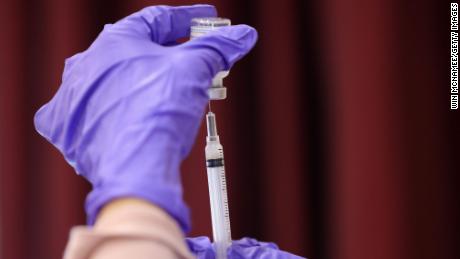
Researchers looked at data from more than 43,000 Covid-19 patients ages 18 years and younger who visited an emergency department or were hospitalized and found that those with underlying health conditions were more likely to experience severe illness or hospitalization. About 28.7% of all those patients had underlying health conditions.
Among the 4,302 who were hospitalized, more than 2,700, 62.9%, had underlying health conditions, the team noted.
The US last month saw the lowest number of weekly Covid-19 cases among children — with about 34,500 new cases — since early October, the American Academy of Pediatrics said last week. But as some states lag behind the national average vaccination rate, it could spell trouble for the youngest and most vulnerable populations, Swaminathan said.
“What we also see is that the same places where adults are lagging, teens are lagging,” he explained.
Vaccine advisers to the US Food and Drug Administration are set to meet Thursday to discuss parameters that should be considered to authorize Covid-19 vaccines for children 11 and younger.
“Do we want a two-month follow-up? Do we want a six-month follow-up? What level of efficacy are we looking for?” advisory committee member Dr. Paul Offit said Friday. “It’s those sort of parameters we’ll be discussing.”
Where vaccinations are lagging
Thirteen states already have reached President Joe Biden’s goal of vaccinating 70% of US adults with at least one dose by July 4. Experts warn that those trailing behind — states primarily in the Northwest and Southeast — may be vulnerable to another outbreak.
“You have parts of the country with very low vaccination rates,” CNN medical analyst Dr. Leana Wen said last week. “I really worry about the unvaccinated people in those areas spreading coronavirus to one another.”
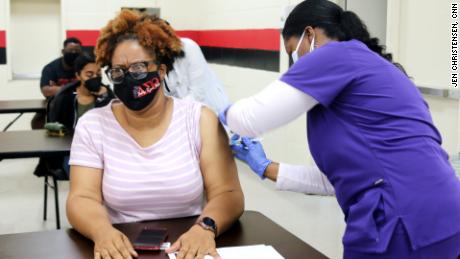
Alabama, Louisiana, Mississippi, Tennessee, West Virginia and Wyoming have the lowest vaccination rates — with less than 50% of adults having received at least one dose. Vermont, Hawaii, Massachusetts, Connecticut, Maine and New Jersey boast the highest, with 75% or more of their adult population partially vaccinated.
Lack of access and unclear messaging have hampered vaccinations in some communities, Swaminathan said.
“There are people who don’t understand the fact that this is free. That messaging hasn’t been done as much as it should be.”
There also are barriers for people who can’t get paid time off of work or have problems finding child care, he said.
While the Biden administration has advocated for more access, it was not soon enough, Swamiathan said.
“I wish we could have had it earlier. People need to take advantage of the situations and get their vaccine.”
Cuomo sets vaccine goal for lifting most NY restrictions
New York Gov. Andrew Cuomo said Monday that he plans to lift “virtually all” pandemic-related restrictions when 70% of adults in the state have received at least one dose of a Covid-19 vaccine.
The state is 1.4% away from hitting that goal, Cuomo told reporters. When the 70% mark is reached, “we can lift the capacity restrictions, social distancing, the hygiene protocols, the health screenings, the potential tracing,” he said.
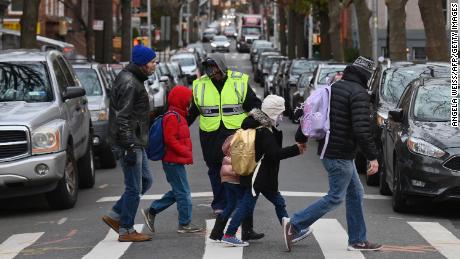
“Masks will only be required as recommended by the CDC,” the governor said. “There will still be some institutional guidelines, large venues, schools, public transportation, hospitals, nursing homes, but we hit 70%, we will be back to life as normal or as normal as you can be post-Covid.”
New York City public schools will continue to enforce the universal mask policy until the end of the academic year despite the state’s decision to no longer require them, NYC Department of Education spokesperson Danielle Filson told CNN Friday.
“Per state guidance, local districts may implement standards that make the most sense for their communities, and we are continuing with our universal mask policy at our schools,” Filson said.
Air travel keeps surging
Air travel just recorded its biggest day since March 7, 2020.
The Transportation Security Administration screened 1.98 million people Sunday, more than any day over Memorial Day weekend, which topped out on Friday, May 28, at 1.96 million people.
It continues the upward air travel trend during the Covid-19 pandemic — though far fewer people are flying than before the pandemic. On June 7, 2019, TSA screened 2.67 million people.
CNN’s Maggie Fox, Lauren Mascarenhas, Artemis Moshtaghian, Pete Muntean, Naomi Thomas and Lauren del Valle contributed to this report.