

February 14, 2022
Even with Omicron’s ongoing exit from the state, you’re still not as safe from COVID-19 as you might think as new data from the Centers for Disease Control and Prevention reveals a significant drop in booster effectiveness after four months.
The new study of a third dose of an mRNA vaccine — either Pfizer-BioNTech or Moderna — found the booster was 91 percent effective against hospitalization for two months before dropping to 78 percent after four months. The CDC reviewed data on 93,000 hospitalizations and 241,000 emergency department and urgent care visits in 10 states during the Delta and Omicron waves extending from last August to January. About 10 percent of people in the study were boosted. More than 50 percent of people hospitalized were over 65 years old.
The original two-dose vaccine series showed declining protection against the highly transmissible Omicron variant, but a third dose in a previous CDC study restored a substantial immune response. The question was how long that revived protection lasted.
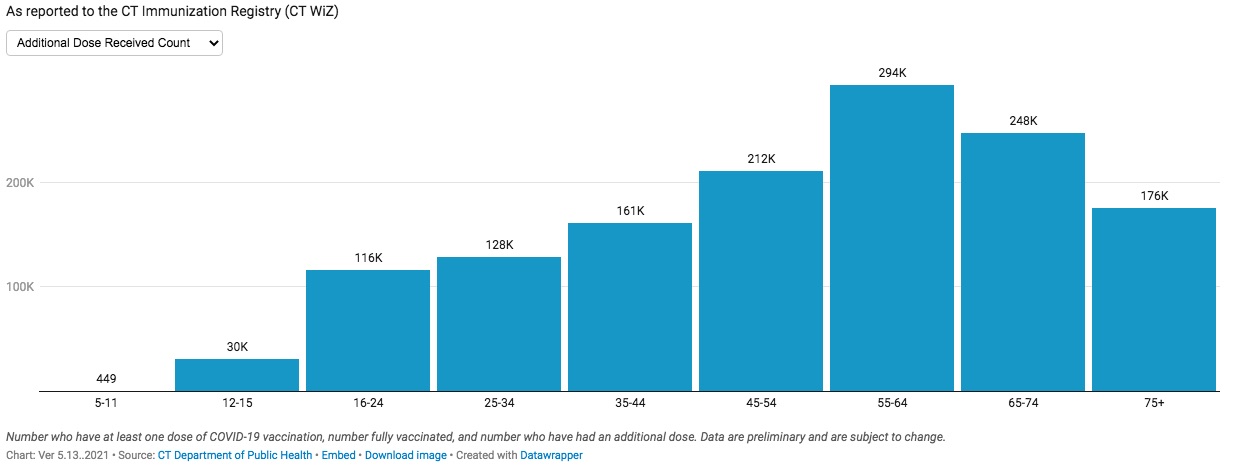
People in Connecticut Who Have Received a COVID Booster, By Age Group
Percent in Connecticut Who Have Received a COVID Booster, By Age Group
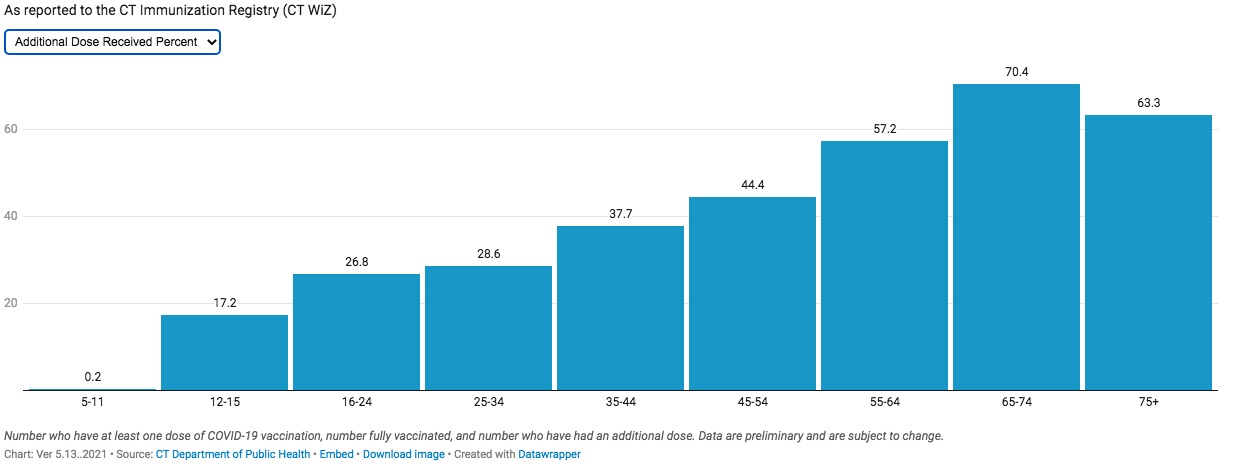
Connecticut, with 48.5 percent of its eligible population boosted based on CDC data, is tied with Massachusetts and Illinois as the 12th most-boosted state.
The 15 Most-Boosted States
1. Vermont: 57.9 percent.
2. Minnesota: 55.2 percent.
3. Wisconsin: 53.7 percent.
4. Maine: 52.9 percent.
5. Iowa: 51.0 percent.
6. Rhode Island: 50.6 percent.
7. Oregon: 50.3 percent.
8. Michigan: 50.1 percent.
9. Ohio: 49.8 percent.
10. Colorado: 49.2 percent.
11. Washington: 49.0 percent.
12. Connecticut, Massachusetts, Illinois: 48.5 percent.
15. Hawaii: 48.4 percent.
The CDC continues to recommend COVID-19 vaccinations for anyone 5 or older. Most people should get a booster five months after receiving the second dose of an mRNA vaccine or two months after receiving Johnson & Johnson’s vaccine. About 91 million Americans have received boostes, according to the CDC, though most who are eligible have not.
“The booster’s reduction in severe hospitalizations,” says Dr. Ulysses Wu, Hartford HealthCare’s System Director of Infection Disease and Chief Epidemiologist. “That’s all you really need to know about it. . . . I’m going to be binary. Booster, good. Not boosted, bad.”
Depending on the next COVID-19 variant, a fourth-dose booster could be based on age and existing medical conditions.