
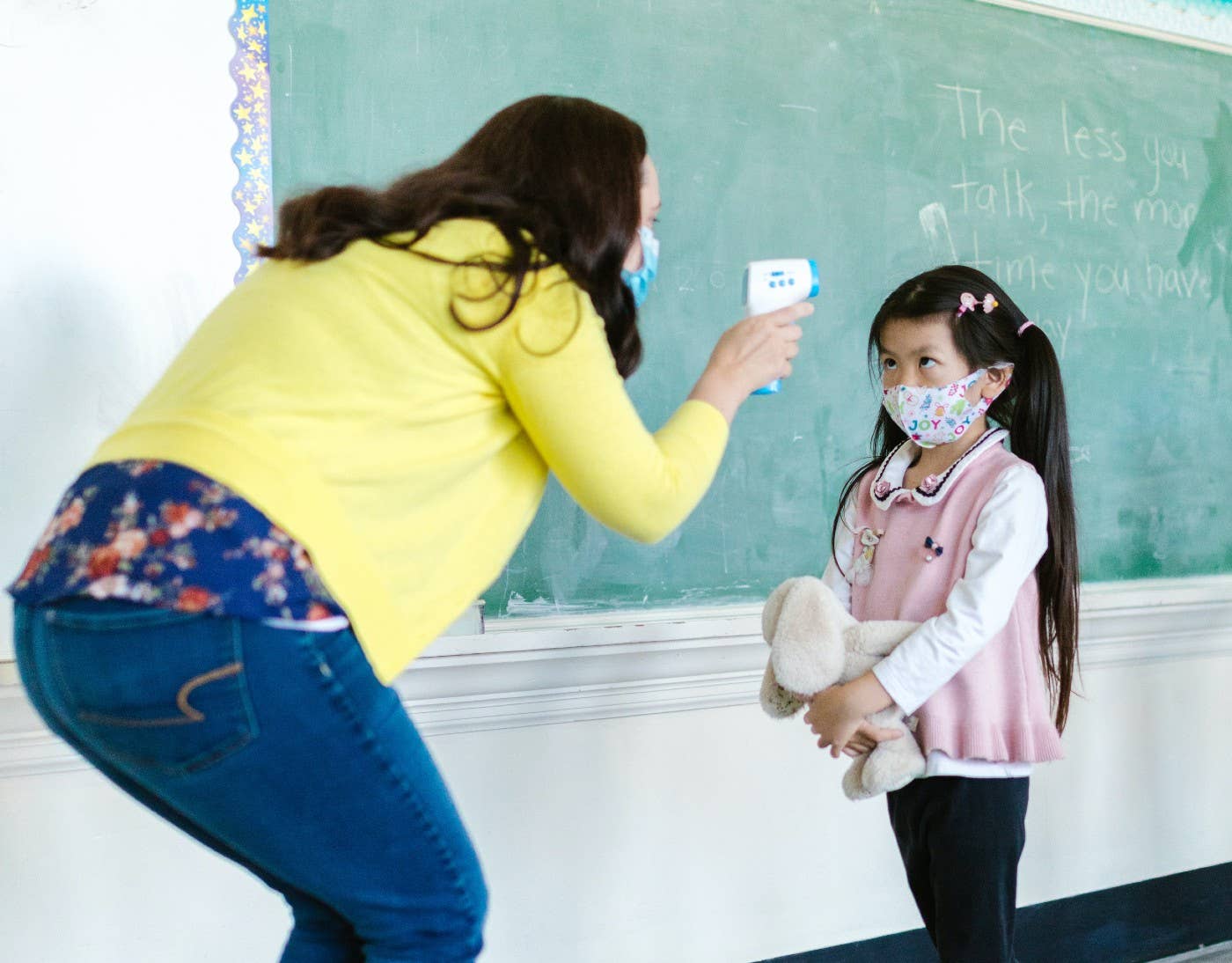
Federal health officials recently tweaked part of the COVID-19 “close contact” guidance in K-12 settings, meaning there are some limited situations in which an exposed student may not have to quarantine.
The Centers for Disease Control and Prevention (CDC) has a host of guidance K-12 school districts can opt to follow, including scenarios when it recommends a student quarantine. For example, if an unmasked, unvaccinated student is within 3 feet of an unmasked student that tests positive for COVID-19, both should quarantine.
But the CDC revised the “close contact” definition on Aug. 5, adding a specific exception for indoor K-12 school settings.
Related: As start of school approaches, Osterholm urges parents to buy high-quality masks
Now, if an infected student and exposed student were 3-6 feet apart in an indoor classroom setting, and both “correctly and consistently wore well-fitting masks the entire time,” the exposed student does not have to quarantine, the CDC says.
This exception doesn’t apply to adults in the room, such as teachers or staff.
The nuances and exceptions can, admittedly, be quite confusing. Chalkbeat has an excellent, easy-to-understand write-up here.
It’s important to remember the CDC guidance is not a mandate. It’s simply the recommended best practices based on the agency’s information.
Related: Video: Immunocompromised teen who asked for mask requirement booed during school board meeting
In Minnesota, state leaders are allowing each individual school district and private school leaders to craft their own COVID-19 policy for the 2021-22 school year, including around masking and vaccinations.
Minnesota parents should check with their child’s school district to find out their local rules.