
For the first time since May, all five Central Texas counties have a low level of COVID-19 spread. That means that transmission rates (new cases per 100,000 people) have fallen below 200 in Travis, Williamson, Hays, Bastrop and Caldwell counties.
A low level of spread means that the U.S. Centers for Disease Control and Prevention recommends that people up to date with COVID-19 vaccines and boosters who are not at risk for severe disease don’t need to take precautions such as masking. Those at higher risk or the unvaccinated also could decide not to take precautions.
In late spring and throughout the summer, Central Texas watched transmission rates climb in the 300s and 400s. First, Caldwell county went to a medium level, followed by Hays. In mid-July those two counties reached the high level of spread. Travis, Williamson and Bastrop county reached medium levels by July and even flirted with high levels, but never quite got there.
More:Austin ISD sees 56% rise in COVID-19 cases compared with last year

A high level would mean that masks and social distancing would be recommended for everyone. A medium level means that masks and social distancing is recommended for people at high risk of severe disease.
On Thursday, the CDC gave these transmission rates:
- Bastrop: County 166.81, down from 208.51 the week before
- Caldwell County: 144.28, down from 261.08
- Hays County : No rate listed this week, but it was 205.48 last week and had been falling each week. The CDC did mark Hays in the low level.
- Travis County : 101.97, down from 126.54
- Williamson County: 131.06, down from 152.57
The counties also have been able to remain in the low level because hospitals only have between 2.9% and 5.6% of beds filled with people with COVID-19, and only have between 6.4 and 8.4 of new admissions per 100,000 people being a person with COVID-19. This summer, 40% of the people at area hospitals with COVID-19 were admitted for a different reason, but happened to test positive. People in the hospital with severe COVID-19 have been predominately unvaccinated, health care officials have said.
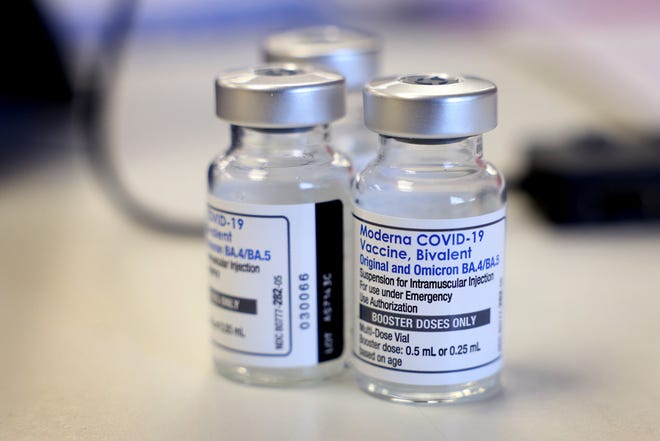
Central Texas went into medium and high levels of COVID-19 spread as the omicron BA.4 and BA.5 variants spread this summer. That is the same variants that are now being targeted in updated booster vaccines from Pfizer and Moderna. Those were approved by the FDA on Aug. 31 and by the CDC on Sept. 1 and started being available in pharmacies days later.
More:Parents need choices to help students overcome COVID-19 learning losses
The Pfizer booster is available for ages 12 and older. The Moderna booster is for anyone 18 and older. You need to have completed the initial vaccine series and be two months past your last COVID-19 vaccine to get the updated boosters.
You can get a flu shot at the same time as a COVID-19 vaccine. Doctors are recommending flu shots this year as they are watching a robust flu season in Australia, which is usually a good predictor of what will come our way.
While the COVID-19 numbers are encouraging for the general public, local schools and university are seeing pockets of high level of spread. Some schools have had more COVID-19 in the first weeks of school then last year. Austin ISD reported a 56% increase in cases from the same time last year.
The University of Texas has filled all of its dorms reserved for people in isolation because of COVID-19. It is now telling students to isolate in place and wear a mask around their roommate.
Monkeypox cases continue to slow down
The other virus on health officials’ minds right now seems to continue to taper. This week, Austin Public Health reported 9 new cases, 156 cases compared with 147 last week. The public health region has 206 cases, up from 185 last week.
More:Austin health leaders keeping eye on COVID-19, monkeypox as flu season nears
Austin Public Health is now working with Wellness Equity Alliance to roll out more monkeypox vaccine to high-risk groups. To find out if you qualify and to schedule an appointment, go to the Wellness Equity Alliance site, wellnessequityalliance.com/monkeypox.
People who get a monkeypox vaccine do need to wait four weeks before getting their COVID-19 booster.