
“We’re definitely going in the right direction. And I think if we can fully vaccinate the American people into the summer, then I think we can look at a really high quality of life,” said Dr. Peter Hotez, dean of the National School of Tropical Medicine at Baylor College of Medicine.
“This is not the time to go high-fiving ourselves and being self-congratulatory,” Hotez told CNN last week.
Here’s how the US is making major strides in this pandemic — and why Americans shouldn’t get a false sense of security:
The number of high-transmission counties is plummeting
Only about 2.4% of the US population — an estimated 8 million people — live in a county considered to have “high” transmission of coronavirus, according to a CNN analysis of data from the US Centers for Disease Control and Prevention.
That’s a big improvement from two weeks earlier, when about four times as many people — over 9% of the US population — lived in a county considered to have “high” transmission.
The CDC considers a county to have “high” transmission if there have been 100 or more cases of Covid-19 per 100,000 residents
Most Americans live in a county that is still considered to have “substantial” transmission (13% of the population) or “moderate” transmission (about 75% of the population).
“We’ve got vaccination rates in the Southern states that are literally one-half that of the North,” he said.
“So I think there’s a vulnerability there in the Southern states that we could still see another fifth peak that could come in the summer. Maybe not quite as bad because some people are vaccinated and some people are infected and recovered and therefore partially immune. But there’s still a lot of vulnerability in the country.”
New Covid-19 cases are dropping
And daily new cases are expected to keep decreasing this month, according to an ensemble forecast from the CDC. The ensemble forecast combines projection models from universities and research groups across the country.
Pediatric cases are going down
“This marks the lowest number of new weekly cases reported in the past year, since June 2020,” the AAP said.
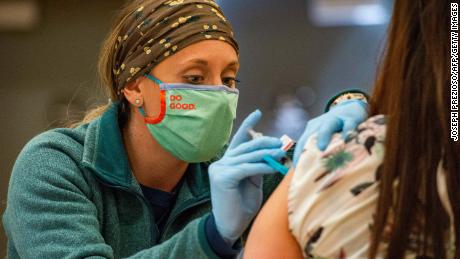
But children are making up a larger portion of new Covid-19 cases. While adults and children ages 12 and up can get vaccinated, children under 12 are not eligible yet.
“Since the pandemic began, children represented 14.1% of total cumulated cases,” the AAP said. “For the week ending June 3, children were 17.2% of new reported weekly COVID-19 cases.”
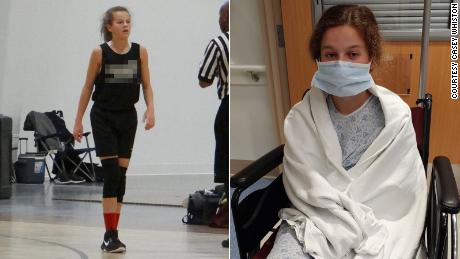
CDC Director Dr. Rochelle Walensky urged parents to get their teens vaccinated.
“In the month leading up to the recommendations of the Pfizer Covid-19 vaccine for teens and adolescents 12 and older, CDC observed troubling data regarding the hospitalizations of adolescents with Covid-19,” Walensky said at a White House coronavirus briefing Thursday.
She said the data should “redouble our motivation to get our adolescents and young adults vaccinated.”
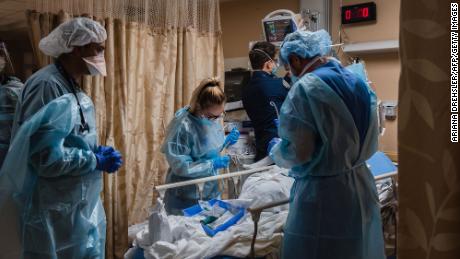
The pediatricians’ group says it’s important for unvaccinated children over the age 2 to keep wearing masks in public places.
“Anything that cuts transmission will help reduce the emergence of new variants. So definitely vaccination and definitely mask-wearing,” Dr. Christopher Murray, director of the University of Washington’s Institute for Health Metrics and Evaluation, told CNN.
“I really think it depends a lot on how well we do at convincing people to get vaccinated and how well we do at getting vaccines out to kids once they’re approved.”
Daily Covid-19 deaths are decreasing
Over the past week, Covid-19 has killed an average of more than 400 Americans a day, according to data from Johns Hopkins University.
While that number is still high, it’s a significant improvement from recent months.
The CDC’s Wednesday ensemble forecast projects a total of 601,000 to 614,000 US lives lost to Covid-19 by June 26.
Its previous forecast, published May 26, projected a total of 606,000 US Covid-19 deaths by June 19.
Covid-19 hospitalizations are expected to keep improving
“The number of cases, hospitalizations and deaths from Covid-19 are all declining because millions have stepped forward to get the Covid-19 vaccine,” Walensky said May 25.
Scholarships, vacations and million-dollar prizes could spur more vaccinations
Businesses and states are offering big incentives for vaccination — including chances to win four-year college scholarships, tropical vacations, free beer and $1 million — to encourage more Americans to help end this pandemic.
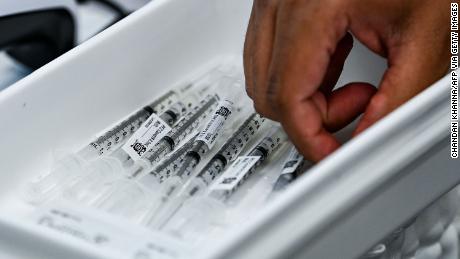
Another incentive to vaccination has been less tangible: the ability to safely go mask-free and stop social distancing in most places.

Actual vaccinations — not just visits to the website — also went up on May 13 after nearly a month of decline, according to CDC data.
But since then, the number of new people fully vaccinated has dropped off each week, according to the data.
“That basically means all of the adults and all of the adolescents” need to be vaccinated, he said.
Even those who’ve already had coronavirus should get vaccinated because research shows immunity achieved through vaccination is better than immunity through previous infection, said Dr. Anthony Fauci, director of the National Institute of Allergy and Infectious Diseases.
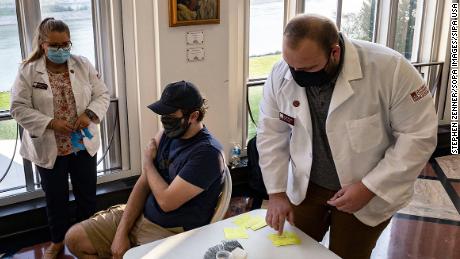
“We need to get vaccinated because vaccines are highly efficacious. They are better than the traditional response you get from natural infection,” Fauci said at a White House coronavirus briefing last month.
Lab research shows those who previously had Covid-19 and received two doses of an mRNA vaccine “had interesting, increased protection against the variants of concern,” Fauci said.
Hotez agreed vaccination — not infections — is the way to end this pandemic.
“Yes, I do think we can vaccinate our way out of this epidemic in the United States,” Hotez said.
“But it’s a high bar. And all the adults, all the adolescents need to be vaccinated.”
Vaccinated Americans are returning to normal life
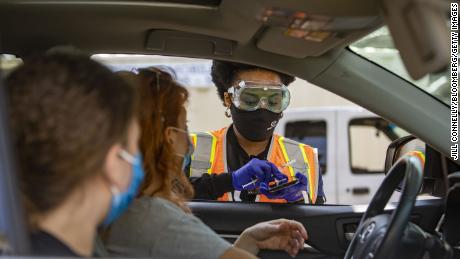
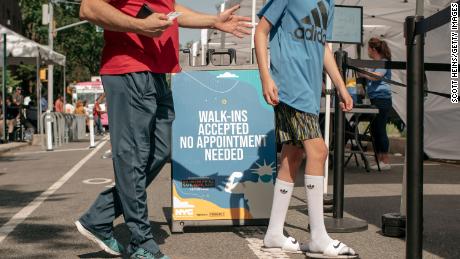
More businesses are starting to fully reopen as more people get inoculated.
But it’s unclear how many unvaccinated Americans let down their guard — and whether that might erase some of the recent gains.
Memorial Day weekend “was the first big stress test,” CNN medical analyst Dr. Leana Wen said shortly after the holiday.
“We have restrictions lifted en masse, people going about their normal lives. We know that in the past, after major holidays and an increase in travel, that we then had a substantial uptick in the rate of infections,” she said.
She said it’ll take about two weeks to see whether Memorial Day events lead to a spike in new Covid-19 cases.
“One of the concerns that …. I have talked about before is maybe the summer is going to be great, which is something to celebrate for sure. But I also think that further removes the urgency for people to get vaccinated. People might be thinking, ‘Well, I was going to do it. But now I don’t think it’s that big of a deal,'” Wen said.
“We could be fine for the summer. But then come the fall, we could have another resurgence. So all this to say we are certainly in a much better place than before. But we’re not in the clear — not by a long shot.”
CNN’s Deidre McPhillips, Elizabeth Cohen, Michael Nedelman and Naomi Thomas contributed to this report.