

Practices implemented during the COVID-19 pandemic, such as flexible working arrangements and teleworking, could help to reduce mental health challenges in the workforce, according to recommendations released Wednesday by the World Health Organization (WHO) and the International Labour Organization (ILO).
The COVID-19 pandemic triggered a 25% increase in what was already a high percentage of people suffering from anxiety and depression worldwide. At the same time, the pandemic accelerated the pace of transformations in the world of work, especially in remote work, e-commerce and automation.
WHO and ILO called for concrete actions to address mental health concerns amongst the working population and provided evidence-based global public health guidance on how to do so with a short policy brief and 135-pages worth of guidelines.
“Work and mental health are closely intertwined,” WHO and ILO wrote in their policy brief. “A safe and healthy working environment supports mental health, and good mental health enables people to work productively. An unsafe or unhealthy working environment can undermine mental health, and poor mental health can interfere with a person’s ability to work if left unsupported.”
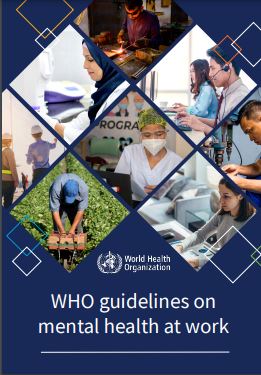
WHO Guidelines on Mental Health at Work provide guidance in the following areas: organisational interventions, manager and worker training, individual interventions for promoting positive mental health, and prevention of mental health conditions. The guidelines also include a section offering recommendations on returning to work following an absence associated with mental health conditions and how to aid people with mental health conditions to gain employment.
The guidelines meet the standards for evidence-based guidelines, although in most cases there is low or even very-low certainty of evidence given that the recommendations are psychosocial.
Leap in depression and anxiety
Even before COVID-19, the world of work was experiencing changes, from technological development, climate change, globalisation, and demographic shifts. The pandemic accelerated these changes and forced companies and organisations to restructure both for financial reasons and to keep workers safe.
For many employees, WHO and ILO noted, these changes created new psychosocial risks or worsened existing ones.
Before the pandemic, in 2019, around 15% of working-age adults lived with a mental disorder, WHO showed in its World Mental Health Report. This included 301 million people who were living with anxiety and 280 million individuals suffering from depression.
COVID led to a 25% increase in anxiety and depression, making the situation more acute. According to the reports, 12 billion working days are lost annually due to depression and anxiety at a total loss to the global economy of $1 trillion, predominantly from lost productivity.
“It’s time to focus on the detrimental effect work can have on our mental health,” said WHO Director-General Dr Tedros Adhanom Ghebreyesus. “The well-being of the individual is reason enough to act, but poor mental health can also have a debilitating impact on a person’s performance and productivity. These new guidelines can help prevent negative work situations and cultures and offer much-needed mental health protection and support for working people.”
Organisational interventions: Small benefit
WHO and ILO provided examples of organisational interventions that employers can take to address psychosocial risks at work, such as supplying flexible working arrangements, involving workers in decisions about their jobs, and changing workloads and work schedules to enable better work-life balance.
Specifically, the research team behind these reports tackled whether universally delivered organisational interventions including teleworking, participatory organisational interventions targeting job design, changes to workload or breaks, nudging strategies, targeting the physical work environment, and providing performance feedback have a beneficial impact on worker outcomes. In all cases, there were small effects in favour of these practices.

The guidelines also include other steps that can be taken by employers, such as training and interventions that improve mental health literacy, strengthening managers’ skills to recognise and act on mental health conditions at work, and empowering workers to seek support.
WHO and ILO also noted the importance of supporting workers with mental health conditions through reasonable accommodations and creating an environment with “cross-cutting actions to improve mental health at work” through seven factors they said are “critical for progress:” leadership, investment, rights, integration, participation, evidence, and compliance.
Leadership involves the development of a mental health plan and assigning roles based on that plan. Investment centers on allocating the financial and human resources towards implementing such plans, as well as including mental health services in any work benefits package.
Rights call on employers to develop and implement non-discrimination policies around mental health and take the necessary steps, such as training programs, to stop stigmas around mental health in the workplace.
Integration embeds mental health into existing occupational safety and health strategies and participation engage workers – especially those who have lived with mental health challenges – in the decision-making process.
Finally, the guidelines recommend that all interventions are based on the latest evidence and, of course, any interventions be provided by accredited service providers.
“As people spend a large proportion of their lives in work – a safe and healthy working environment is critical. We need to invest to build a culture of prevention around mental health at work, reshape the work environment to stop stigma and social exclusion, and ensure employees with mental health conditions feel protected and supported,” ILO Director-General Guy Ryder said.
Image Credits: Wikimedia Commons, World Health Organization, Prem Kumar Marni/Flickr.
Combat the infodemic in health information and support health policy reporting from the global South. Our growing network of journalists in Africa, Asia, Geneva and New York connect the dots between regional realities and the big global debates, with evidence-based, open access news and analysis. To make a personal or organisational contribution click here on PayPal.