The SARS-CoV-2 virus that resulted in the coronavirus disease 2019 (COVID-19) pandemic was first detected in Wuhan, China, in December 2019. This novel coronavirus spread rapidly around the world, and in March 2020, the World Health Organization (WHO) declared COVID-19 a worldwide pandemic [1]. Current statistics show over 520 million cases worldwide, with more than six million deaths as of May 2022 [2].
Since the first case of COVID-19 emerged over a year ago, the extent of its consequences has been devastating in many ways. The global health, social, and economic effects of this pandemic will be felt for years to come. Before the production of efficacious vaccines, efforts to prevent the spread of COVID-19 relied heavily on social distancing, self-isolation, hand hygiene, mask mandates, travel restrictions, and widespread testing.
As vaccines became available between December 2020 and March 2021, the next step in preventing the spread of COVID-19 became mass vaccination to reach herd immunity, which is defined as a high enough vaccination percentage within the community to prevent the massive spread of disease [3,4]. Vaccines available and deemed effective by the Centers for Disease Control and Prevention (CDC) are Johnson & Johnson, Moderna, and Pfizer [5]. Over 11 billion vaccine doses have been given worldwide; however, in Chemung County, NY, where this study was conducted, the vaccination rate is only 58.99% [6].
Vaccine hesitancy is defined as a motivational state of being conflicted about the effects or safety of a certain vaccine or being opposed to vaccination in general [7]. Vaccine hesitancy is not a single entity; it lies between complete acceptance and refusal of all vaccines. Within the context of this pandemic, the term “anti-vaxer” may apply only to the COVID-19 vaccine rather than as a blanket term for those who refuse all vaccines. In researching the reasoning of the unvaccinated, our terminology must expand with our understanding of their personal barriers [1,8].
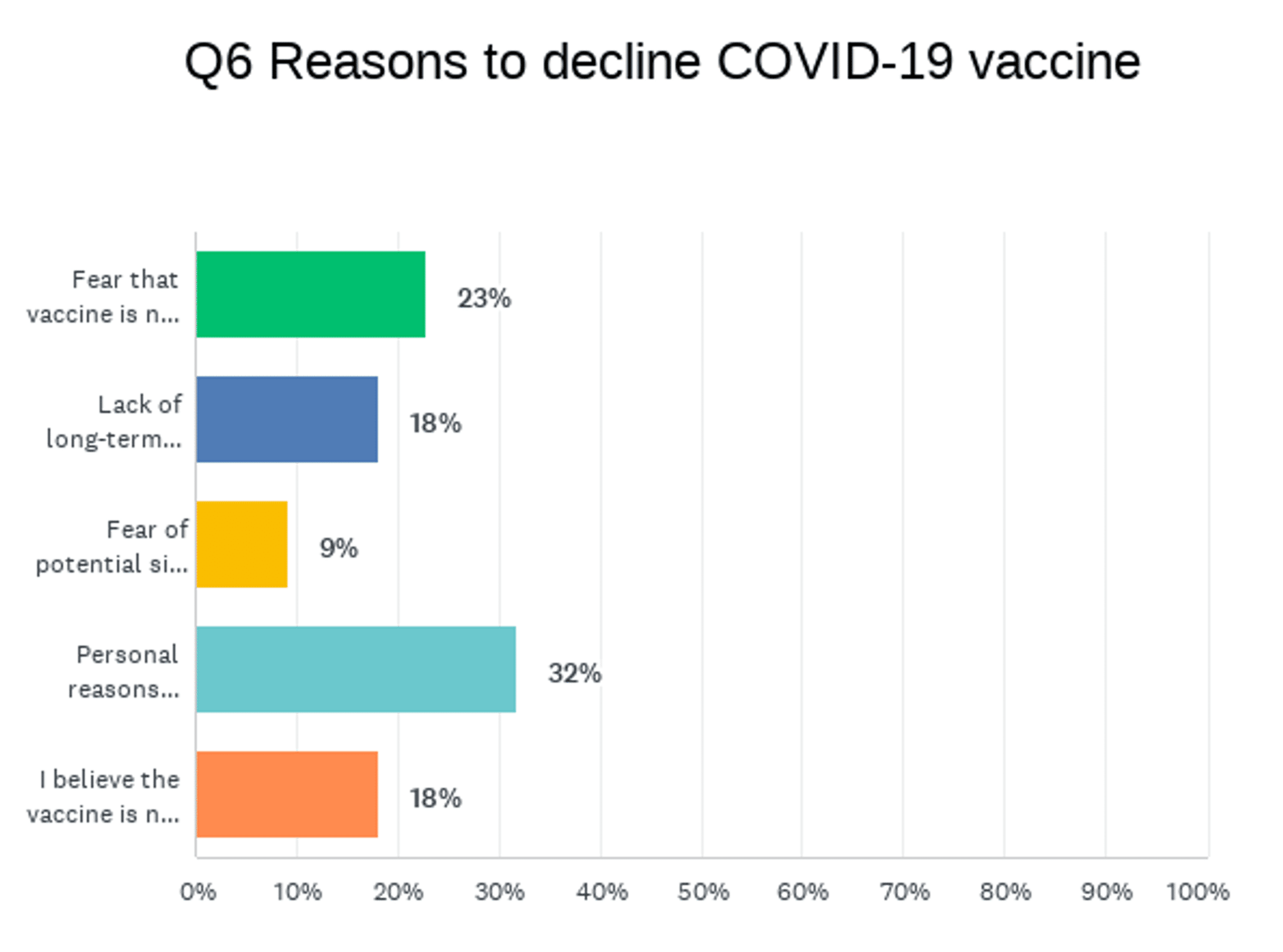
The dilemma of COVID-19 vaccine hesitancy is multifactorial and comprises many barriers. Of primary concern is the politicization of vaccine uptake and a growing sense of distrust in the government and mainstream media’s representation of “health facts” on the news [9]. Additional factors include whether to trust the vaccine or the provider of the vaccine. Dror et al. found that geopolitical concerns over the vaccine’s country of origin were likely to impact the uptake of the vaccine globally [10]. Moreover, the concerns of Americans include factors such as the speed of the vaccine’s development, its components, efficacy, the rigor of testing, and its potential for causing long-term adverse effects [9]. Many patients also struggle to understand the value of the vaccine and they lack convenient access to it [11].
Many employers under the guidance of New York State, especially within health care, have introduced vaccination mandates for employees to reduce the burden of COVID-19 among healthcare workers. These mandates were an ultimatum: be vaccinated or be unemployed. In many places, mandates were met with hostility and a mass exodus of healthcare workers who stated similar reasons for vaccine distrust as listed above. In rural New York, where our study was conducted, the medical center lost 80 employees to vaccine mandates. Some employees resigned voluntarily before the deadline due to disagreement with the mandate, and those who refused to be vaccinated by the deadline were terminated. These individuals were willing to risk their financial security rather than receive the vaccine, believing that the act of a mandate inherently violates the principle of their autonomy [12]. New York State was dumbfounded by the negative response to these mandates, namely, severe staffing shortages, and in February 2022, decided that despite the original intent of its mandate, the state would not be enforcing the mandate regarding booster shots [13]. This decision was not based on health data but rather a response to social behaviors that dictated the necessity of removing a mandate to staff hospitals amidst the crisis of a pandemic, further illustrating the complexity of questions and problems regarding the vaccination of American citizens. More data on the consequences of vaccination mandates on the attitudes of employees will be required to understand the impact of the concept on global health and the economy in other democratic states.
Anti-vaccine attitudes and beliefs that pre-date the COVID-19 pandemic pose another significant barrier to vaccine uptake along with a pervasive lack of trust in pharmaceutical companies and government agencies such as the CDC. People with conservative political beliefs, residence in non-metropolitan areas, and recent refusal of the seasonal influenza vaccine are other major factors and obstacles to COVID-19 vaccine uptake [7].
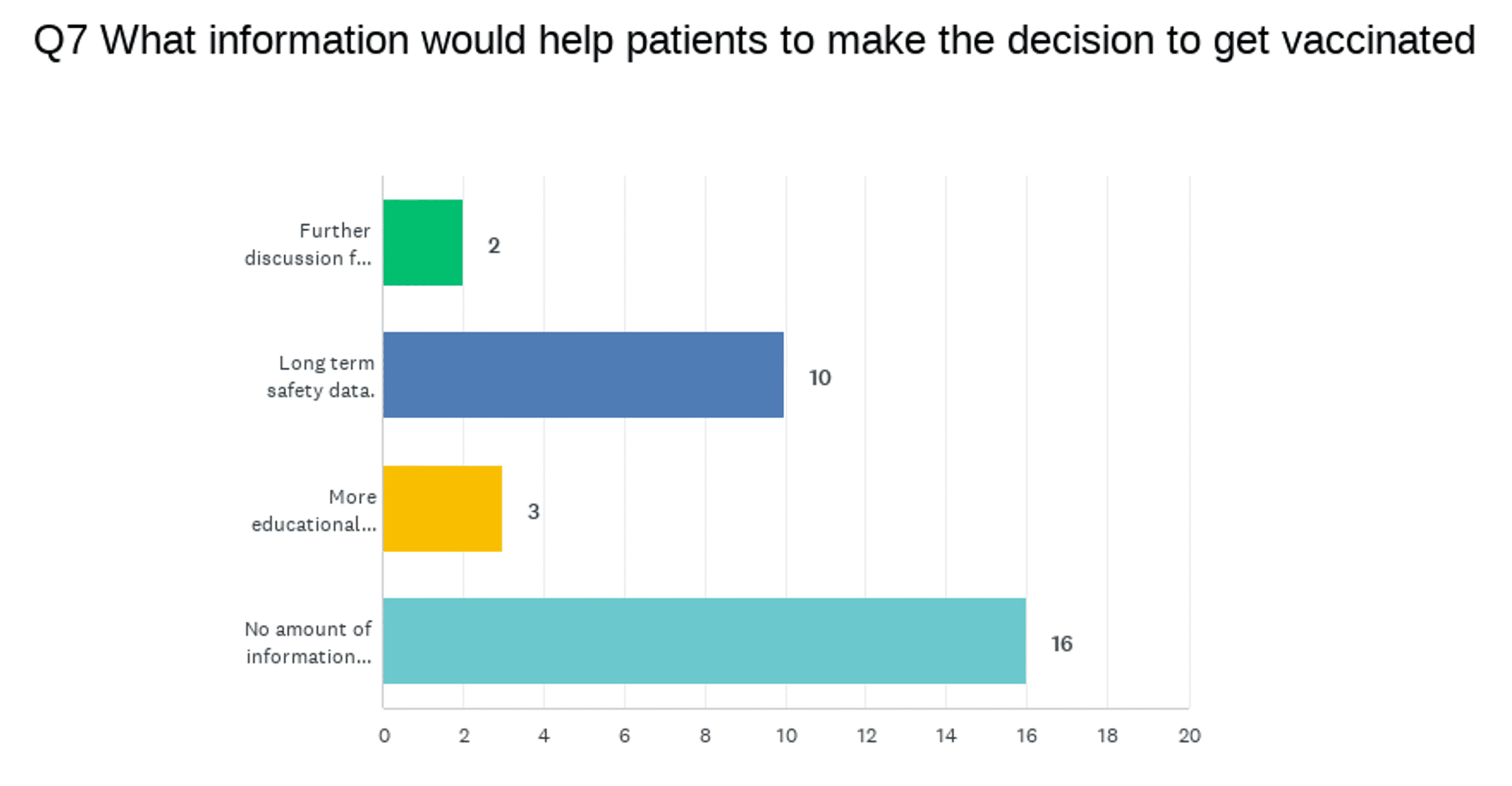
Public health awareness about the risks of COVID-19 and the benefits of vaccination needs to be communicated in ways that are easily accessible and understandable within the community [14]. This study is valuable as a means to decipher which types and routes of communication may be useful in targeting the vaccination rate in rural America.