
Since the ending of Covid-19 restrictions recently, people have been getting on with their lives. Ireland is alive again.
But many people are also moving on with continued caution too, wearing masks when out and about and avoiding crowded places, or risky environments.
With the rise in cases recently, this week has seen divided opinion among doctors, some experts and politicians on whether Ireland moved too fast to ease restrictions, given the severe pressures on the health system.
After its meeting on Monday, the Emergency Department Task Force wrote to the Minister for Health calling for a meeting of public health experts to consider a return to mandatory mask wearing.
On Thursday, both the Irish Nurses and Midwives Organisation (INMO) and the Irish Association for Emergency Medicine (IAEM) called for a return of the mask mandate, for around 4-8 weeks, to reduce cases and relieve the pressures on hospitals.
Dr Fergal Hickey, President of the IAEM, and a seasoned medical practitioner, said that the situation in hospitals was the worst he had seen in all his working years. He pointed to a perfect storm whereby, a more contagious version of Omicron – BA2 is circulating, there are a large number of outbreaks in hospitals, and a disproportionate number of patients in ICU are either not vaccinated, or partially vaccinated. Staff are tired and under a lot of pressure.

But there are other views about the impact of a return to a mask wearing mandate. RCSI infectious disease expert, Professor Sam McConkey, said it was not clear whether even very serious restrictions like a 2km rule and mask wearing for everyone could contain the current spread of the BA2 version.
Covid-19 continues to place severe pressure on the health system. There are around 12,000 acute hospital beds. Of these around 1,500 are taken up with patients who have the disease. That means they need to be placed together, away from non-Covid cases, and this makes the operation of the hospital system difficult, as some spaces are no longer generally available. There are signs however that hospital cases are falling with 1,472 Covid cases yesterday.
Thousands of HSE staff are out due to Covid, which also affects the ability of the service to fully deliver care. And the INMO believes the current wave has still not peaked. It says the impact will be that planned procedures will have to be cancelled, resulting in longer waiting lists for patients. It said that over 76% of outbreaks now are in healthcare settings.
The pandemic has also had a big impact on the blood supply. The Irish Blood Transfusion Service has been forced recently to import blood from the NHS service. The blood transfusion service is also to cut the 14 day post-Covid rule for blood donations to 7 days and a negative antigen test, due to shortages of blood, given that supplies are down to 4 days.
Up to 65% of nursing homes are also experiencing outbreaks but most residents are not very ill. Nursing Homes Ireland put the number of open outbreaks at around 330 but the number of infections in each home is generally low.
“The question now is, with hundreds of thousands of cases a week, what is the best strategy?”
While restrictions have fallen away, one of the best defences remains – vaccination. Ireland has achieved a high uptake and this has made the current situation significantly better than it otherwise would have been. Vaccination has reduced the harm for those infected.
However, Minister for Health, Stephen Donnelly, pointed out this week that there are still 700,000 people who have received just two vaccinations and he urged them to get their booster jab as soon as possible. The National Immunisation Advisory Committee is due to give advice shortly on when a fourth dose of vaccine should be offered and who should get it.
People are still getting sick with Covid-19 and there continue to be deaths, but the number of people dying is reduced compared to other waves. In the week to last Saturday, there were 26 Covid-19 deaths reported in that week, according to the Health Protection Surveillance Centre.
Much of the architecture of the Covid-19 protections is gone. The National Public Health Emergency Team has been disbanded. The detailed modelling is gone. The emergency pandemic legislation lapsed at midnight on Thursday and is not being reviewed. All restrictions are removed, replaced with advice on wearing masks on public transport, in healthcare settings and crowded places.
Recently, the World Health Organisation (WHO) listed Ireland as among some of the countries that had lifted restrictions too fast. Indeed, “brutally” was the term used.
Clare GP, Dr Yvonne Williams, has said family doctors would like to see the Government reintroduce mandatory mask wearing. But she observed that ministers might be reluctant to do so as it might be seen as an admission that measures were lifted too fast.
Earlier this month, the biggest bus driver union called on the Government to reintroduce mandatory mask wearing on public transport, to protect workers. The National Bus & Rail Union said buses and trains were busy and workers did not feel safe.

What is the public to make of all of this? For much of the pandemic, there was considerable consensus on what to do, driven by expert public health advice. There were divided views, of course, among some doctors, policy analysts and the public. The question now is, with hundreds of thousands of cases a week, what is the best strategy? This week we have seen big divisions emerge over the best approach for the weeks ahead.
The Government has made it clear that it has no plans to reintroduce restrictions, in particular mandatory mask wearing. The Taoiseach said it would not change the current situation or the pressures on hospitals. Tanaiste, Leo Varadkar, also said that most people get Covid-19 at home, where they are not going to be wearing masks anyway.
The Government view with advice from the Chief Medical Officer, is that Ireland is close, or past the peak. The PCR positivity rate yesterday was 38.3% and has been reducing since late March. Also, the seven-day rolling average of PCR positive cases has fallen over the past week. This excludes the number of self-reported positive antigen tests.
Yesterday, Dr Nuala O’Connor, Covid Lead for the Irish College of General Practitioners, said GPs have noticed in the last week a reduction in the number of people contacting family doctors with Covid related queries. She said while there are indications the virus is slowing there is still a lot of it in the community.
The only event that could change the current situation significantly is if a new variant of concern was to emerge. Even then, the question must be posed, would the public be prepared to go back to anything like a Level 5 lockdown, if that was suggested?

While Covid may recede soon, long Covid will be here for some time to come. Minister for Health, Stephen Donnelly told the Dail this week there are 50 possible symptoms of long Covid persisting beyond 12 weeks. They account for between 10 and 20% of those who have had Covid-19.
€2.2 million has been allocated for a HSE interim model of care, which is now focusing on post-acute and long Covd clinics in each of the hospital groups. They are currently operating in four of the seven hospital groups and work is underway to establish a national network.
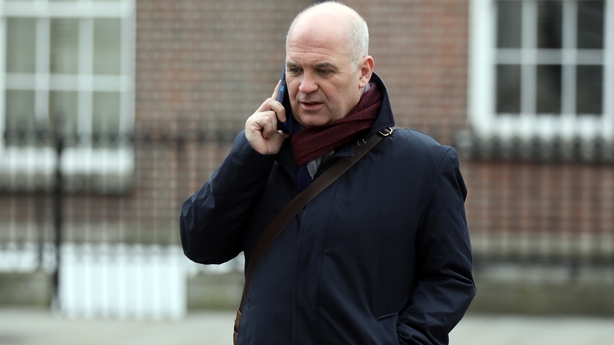
News that the Chief Medical Officer, Dr Tony Holohan, is to take up a new post at Trinity College Dublin in the summer was also a sign of change. He has been perhaps the most significant figure throughout the pandemic, with some bruising encounters with the Government.
In a response to queries from RTÉ News, Trinity College Dublin (TCD) has provided more details about the new post Dr Holohan is taking up. The post is an “open-ended” secondment, funded by the Department of Health. Dr Holohan is being seconded to Trinity under the same terms and conditions as his existing CMO contract.
The post he is taking up is as Professor of Public Health Strategy and Leadership 2022. It was not put out to open competition. TCD said that the post “was created with Dr Holohan in mind”. It was created by the College Board in the context of recent and ongoing global events, including conflict, climate change, migration and the recent pandemic.
TCD also said that the arrangements for the approval of the new professorship were in line with normal processes and akin in some respects to the creation of a new professorship funded by a research body.
Following an interview by the selection committee (the Provost, Vice-Provost, three faculty Deans and an External assessor from the University of Milan) the TCD University Council approved the appointment of Dr Holohan on 25 March last.
Dr Holohan remains CMO until he leaves in the summer and is currently reviewing the seven-day isolation period, having been asked to do so by Government. In the UK & US, it is down to 5 days. But no change is expected here anytime soon.
A new 12-member expert group is also being finalised. It will advise the Government on medium to long term Covid planning. But it will not be holding regular press briefings or be anything like its predecessor, NPHET.
While the pressures on the hospital system will likely persist through April, the hope is that the current wave of Omicron will reduce over the weeks ahead.
The last few years dealing with the pandemic has been a traumatic time for everyone. It brought shock, disbelief, anger, loneliness, serious illness and death. It upended society in a way never seen in modern times and the shock waves will continue for a long time to come.
Our lived experience of these Covid years should remind us that we should all be gentle with each other. It has brought home the universal truth, in the most dramatic fashion, that no one ever really knows what is coming next and that sadly, some family, friends and work colleagues, who are with us today, may not be here tomorrow. Covid has taught us to better treasure life, personal freedom and the company of people we love.