
The other states are: Arizona, Delaware, Georgia, Massachusetts, Mississippi, Missouri, Nevada, New Mexico, North Carolina, Ohio, Oklahoma, Pennsylvania, Rhode Island, Texas and Vermont, according to HHS.
In Washington, Gov. Jay Inslee announced Thursday he will be requiring hospitals to temporarily halt nonurgent procedures in an effort to get staff positioned to assist people who need help immediately.
“This is one of the ways to increase capacity to deal with this Omicron surge, obviously,” Inslee said. “So, we are going to be requiring hospitals to temporarily halt nonurgent procedures — so as much capacity and staff can be dedicated to emergent needs, the people who need this right now.”
Inslee said this new requirement is “not just for Omicron patients, but for heart attack victims, for car crash victims, for gunshot victims, they all need help right now.”
In Kentucky, hospitals have less than 10% capacity remaining in the intensive care units, according to data Wednesday from the Health and Human Services.
“I’ve already had to call out the National Guard,” Gov. Andy Beshear during a news conference Thursday. “And that next person in a car accident might not get the care they need. So get vaccinated for that person.”
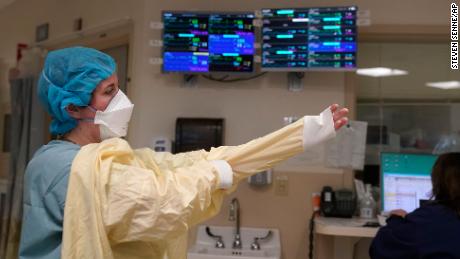
“The problem is that right now we have hospitals where there’s not enough nurses to take care of the patients who are coming in, the Covid patients and the non-Covid patients,” Spencer told CNN’s Laura Coates on Wednesday.
Dr. Vivek Murthy, the US surgeon general, told CNN’s Wolf Blitzer on Thursday he believes the next few weeks will be challenging.
“We’ll continue to see high numbers of cases. Our hospital systems in parts of the country are strained and that will continue, which is why the president announced that a thousand additional members of the Department of Defense were going to shore up and strengthen hospital systems across the country and the millions of pieces of protective equipment that we have sent and will continue to send to hospital systems,” Murthy said.
“So, a tough few weeks ahead. But I think there will be better days on the other side,” he said.
Share of hospitalizations from breakthrough infections is growing, but risks for unvaccinated are higher
Fully vaccinated people are accounting for a growing share of people hospitalized with Covid-19 — but hospitalizations among people who received a booster shot still are rare, and the gap in risk by vaccination status has been wide.
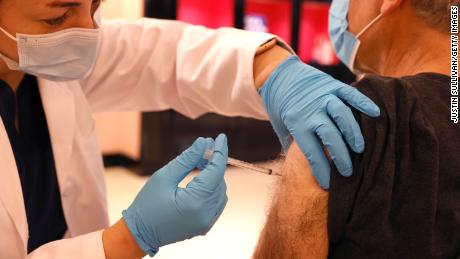
Between April and July 2021, before the emergence of the Omicron variant, more than 90% of Covid-19 hospitalizations were among people who were either unvaccinated or partially vaccinated, according to a study published by the Centers for Disease Control and Prevention.
But a sampling of data collected by CNN suggests that figure has dropped to somewhere between 60% and 75% in recent days and months:
• In Pennsylvania, about 75% of Covid-19 hospitalizations between September and early December 2021 were among people who were not fully vaccinated, according to data from the state health department.
• In New York, about 61% of Covid-19 hospitalizations during the week ending January 2 were among people who were not fully vaccinated, according to data from the state health department.
• Beaumont Health, the largest health care system in Michigan, reported last week that 62% of Covid-19 patients in its eight hospitals were unvaccinated.
While fully vaccinated people are accounting for a larger share of Covid-19 hospitalizations, multiple accounts suggest that those who are fully vaccinated and boosted account for a small share.
The CDC did not respond to CNN’s multiple requests for data on the share of Covid-19 hospitalizations by vaccination status.
The agency publishes data on its website regarding the relative risk by vaccination status. Cumulatively, the risk of hospitalization has been eight times higher for unvaccinated people than for fully vaccinated people. But in the last week of November, CDC data showed that hospitalization rates were about 17 times higher for unvaccinated people than for fully vaccinated people.
CDC to update mask guidance
The US averaged more than 771,580 new Covid-19 cases daily over the past week, according to Johns Hopkins University data, more than three times that of last winter’s peak average (251,987 on January 11, 2021) and more than 4.5 times the peak from the Delta-driven surge (166,347 on September 1).

The CDC plans to update information about mask-wearing, including the different levels of protection that various masks — such as cloth, surgical or N95 — provide against the spread of Covid-19, CDC Director Dr. Rochelle Walensky said during a White House virtual briefing Wednesday.
Overall, it is important for people to wear any face mask that they have access to, “but Omicron has changed things a bit because it is so transmissible that we know that masks are even more important,” Lori Tremmel Freeman, chief executive officer of the National Association of County and City Health Officials, told CNN.
CNN’s Jacqueline Howard, Deidre McPhillips, Naomi Thomas, Virginia Langmaid, Christina Maxouris, Kate Sullivan, Liam Reilly, Claudia Dominguez and Andy Rose contributed to this report.