
The last state to report the variant is South Dakota, which confirmed its first case on Tuesday.
With the more transmissible variant spreading, this puts even more pressure on local and state officials to vaccinate more people.
Dr. Anthony Fauci said Tuesday he’s “very concerned about” the stark disparity between places with low and high vaccination rates. This unfortunately could lead to there soon being “two Americas” — one where most people are vaccinated and another where low vaccination rates could lead to case spikes.
“When you have such a low level of vaccination superimposed upon a variant that has a high degree of efficiency of spread, what you are going to see among undervaccinated regions — be that states, cities or counties — you’re going to see these individual types of blips,” he said. “It’s almost like it’s going to be two Americas.”
Young people — age 18 to 24 — are still a group that officials are trying to get vaccinated. The proportion of young people hospitalized is increasing, according to Dr. Rochelle Walensky, Centers for Disease Control and Prevention director.
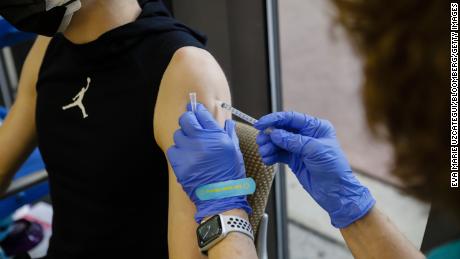
Since May, people ages 12 to 29 have accounted for about a third of hospitalizations — a greater proportion than in the past, Walensky said. CDC data shows, however, that vaccination coverage among young adults is improving. Over the past two weeks, the 18-24 age group made up 12.6% of those becoming fully vaccinated, the CDC said.
But spikes in coronavirus cases are “entirely avoidable, entirely preventable” with vaccination, said Fauci, who heads the National Institute of Allergy and Infectious Diseases.
“I’m concerned about the Delta variant,” US Surgeon General Dr. Vivek Murthy told CNN on Wednesday. “And I am worried that what we are seeing in terms of a plateauing of cases nationally but also an increase in cases in many small sections of the United States, that that is, in fact, being driven by the Delta variant.”
There is still a lot of virus circulating in the US, and close to 300 people — “just far too many” — are still dying daily from the coronavirus, Murthy said, citing data from recent weeks.
“This is not over, and the virus wins when we let our guard down, when we take our eye off the ball,” he said. “We’ve seen many times that it’s fooled us in the past. We’ve got to stay vigilant, got to get vaccinated, we’ve got to talk to other people about getting vaccinated.”
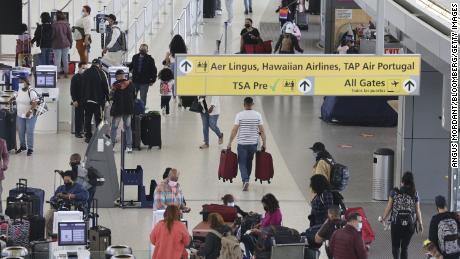
“Every time a virus gets better at transmitting, the number of people that have to be vaccinated to reach herd immunity increases,” said Andrew Pekosz, a professor of immunology at Johns Hopkins Bloomberg School of Public Health who is studying the coronavirus.
“Certainly, we are not out of the woods yet because we haven’t had a vaccination rate where we get those herd immunity effects.”
Mississippi joins Alabama, Arkansas, Wyoming, and Louisiana in having less than 35% of residents fully vaccinated.
Mask guidance stays the same in most places
Even as the Delta variant spreads, most mask guidance and policies don’t appear poised to change.
“For now, the CDC recommendations stand that if in fact you are vaccinated — fully vaccinated — you are protected, and you do not need to wear a mask outdoors or indoors,” Fauci said.
Policies around masks on planes and public transport aren’t expected to change soon, Walensky said Wednesday on ABC’s “Good Morning America.”
“Vaccinated people can take off their masks and celebrate July Fourth and feel safe in doing so, see each other smile again,” she added. “And then we’re really going to have to continue the hard work that we are doing to get people vaccinated and for those who are not to continue to protect them with mask wearing and distancing because of this Delta variant.”

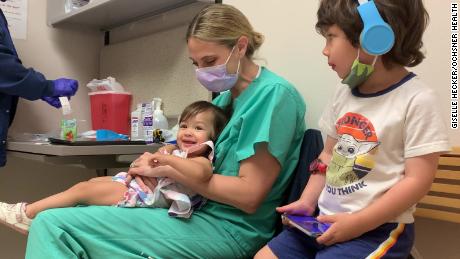
Children under 12 — who aren’t yet eligible for coronavirus vaccines — should continue to wear masks indoors until the Delta variant is under control in the US, Dr. Peter Hotez, dean of the National School of Tropical Medicine at Baylor College of Medicine, told CNN on Wednesday.
Local differences in where the variant has spread means parents need to fully understand the risk in their area, he added.
“A lot of it has to do with where you are,” Hotez said. “If you’re in the Northeast, where transmission is really low, then your kids are a lot safer than in parts of the south-central US right now, where the epidemic is really taking off, that one-two punch of the Delta variant and low vaccination rates.”
Regardless of age or vaccination status, Los Angeles County has brought back its voluntary guidance to wear masks until health officials can “better understand how and to who the Delta variant is spreading,” the county’s department of public health said.
And while nearly all the staff at Johns Hopkins’ public health school in Baltimore are vaccinated against Covid-19, they are still wearing masks to work, Pekosz told CNN.
“We still have a masking policy here, particularly in group situations,” he said. “This pandemic isn’t over yet.”
Los Angeles County appears to be the only county so far to recommend wearing masks in response to the spread of the Delta variant, the National Association of County and City Health Officials told CNN on Tuesday. But health officials are continuing to monitor the spread of the variant in the US, said Lori Tremmel Freeman, the group’s chief executive officer.

Meantime, most adults who plan to get the Covid-19 vaccine have already done so, another poll shows.
In the long term, the cost of the pandemic is not just lives lost but also the mental health and well-being of people across the country, Murthy told CNN on Wednesday.
“We have a long way to go to recover from this pandemic,” he said. “We can only do it together, but it starts with us getting vaccinated.”
Covid-19 cases among children are dropping
Children represented about 10% of reported Covid-19 cases last week. More than 4.03 million children have tested positive for Covid-19 since the start of the pandemic.
Data for vaccine efficacy in children under 12 may be analyzed “in the fall/winter timeframe,” according to Dr. Peter Marks, director of the US Food and Drug Administration’s Center for Biologics Evaluation and Research.
“It makes sense that it’s going to take a little longer there, because there had to be dose de-escalation — lower doses used, essentially dose de-escalation — and as well as we want to see longer follow-up data to make sure that we have the kind of safety in that population,” Marks said.
Vaccines protect against Delta variant, experts say
As variants spread, health experts are urging people to get fully vaccinated so they can have maximum protection.

As for the Johnson & Johnson Covid-19 vaccine, it’s “highly likely” it can protect against the Delta variant, though it hasn’t been proven through research yet, Fauci said.
Two doses of the AstraZeneca Covid-19 vaccine, which uses the same platform as the Johnson & Johnson vaccine, are about 88% effective against the Delta variant, and “you can make the reasonable assumption” the Johnson & Johnson vaccine will be “just as good,” Fauci said.
As of Tuesday, 46.4% of the US population was fully vaccinated, CDC data showed. Sixteen states have fully vaccinated more than half of their population. And 16 states have reached President Joe Biden’s goal to vaccinate 70% of adults with at least one dose by July 4.
CNN’s Maggie Fox, Jamie Gumbrecht, Joe Sutton, Kay Jones, Lauren Mascarenhas, Deidre McPhillips, Sarah Braner and Naomi Thomas contributed to this report.