
In addition, more than 3.5 million people ages 12 to 17 have received their first dose, Dr. Rochelle Walensky said.
And more people of color are getting vaccinated — marking “encouraging national trends,” said White House Covid-19 Response Team senior adviser Dr. Marcella Nunez-Smith.
In the past two weeks, 51% of those vaccinated in the US were people of color. That’s higher than the 40% of the general population these groups represent.
“We recognize ZIP code is a stronger predictor of health,” Nunez-Smith said. Meeting people where they are and bringing vaccines to communities seem to be working, she said.
But efforts to protect minority communities appear to be paying off. From all the federal vaccination sites run by the Federal Emergency Management Agency, about 60% of shots have been given to people of color, Nunez-Smith said.
And about 70% of shots administered through the federal government’s community health centers have been given to people of color, she said.
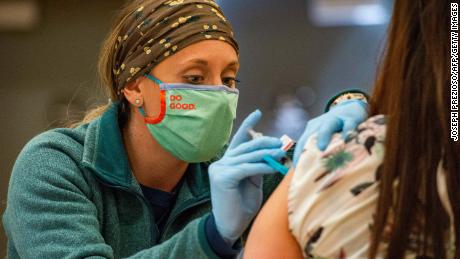
“We need to continue to ensure vaccination coverage is uniform across the country,” Walensky said Tuesday.
“This will require us to meet people where they are, to listen to their concerns, and to help people make informed decision about vaccination.”
Rules on masks in some places are shifting
“We already know through human nature that when you say, ‘You don’t have to wear a mask if you’re vaccinated,’ people who are not vaccinated are going to be reluctant to walk around with a mask, because that means, ‘I’m not vaccinated,'” Fauci told reporters Tuesday at an event hosted by Italian ambassador to the United States, Armando Varricchio.
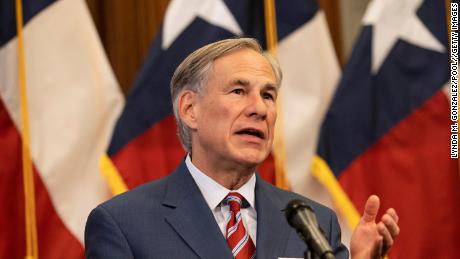
Those attempting to impose a mask mandate can be subject to a fine of up to $1,000, beginning Friday, according to a news release.
“Texans, not government, should decide their best health practices, which is why masks will not be mandated by public school districts or government entities. We can continue to mitigate COVID-19 while defending Texans’ liberty to choose whether or not they mask up,” Abbott said in a news release.
“Unvaccinated Delawareans should continue to wear masks to reduce their risk of contracting and spreading COVID-19,” Carney’s announcement read.
Some state and local leaders hold onto masks
Other leaders have not been as quick to ditch mask requirements.
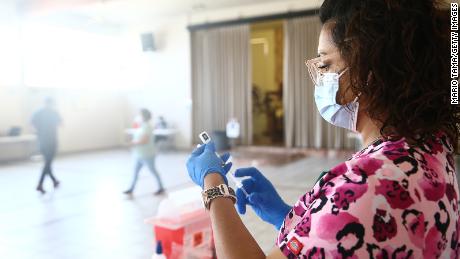
“Outdoor environments pose a lesser risk of transmission of the virus than indoor settings, and lifting the indoor mask mandate at this time could lead to a rise in transmission among those not yet fully vaccinated, including children who are either not yet eligible or who have just recently become eligible,” Murphy said in a statement.
“As we approach our vaccination target in the coming weeks, we expect to be able to safely lift the indoor mask requirement soon,” he added.
California plans to keep its mask mandate for indoor activities in place for another month, officials said. The state’s face covering rule will be dropped for fully vaccinated residents on June 15, Health and Human Services Secretary Dr. Mark Ghaly announced.
“This four-week period will give Californians time to prepare for this change, while we continue the relentless focus on delivering vaccines, particularly to underserved communities and those that were hard hit throughout this pandemic,” Ghaly said.
Lagging vaccinations in rural areas could prolong the pandemic, CDC says
Rural Americans have an increased risk of hospitalization and death from Covid-19, yet vaccination rates in these areas lags behind cities.
And that could delay the end of this pandemic, according to a CDC report published Tuesday.
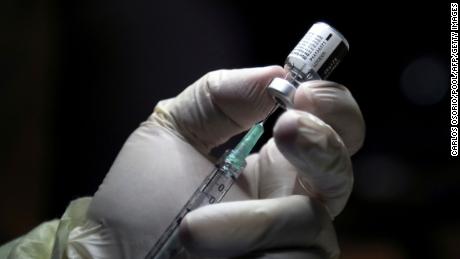
In September, the rate of Covid-19 in rural counties surpassed the rate of Covid-19 in urban counties.
But only about 39% of those in rural counties had been vaccinated through April, compared with about 46% through April, according to the CDC’s Morbidity and Mortality Weekly Report.
About 60 million Americans — one-fifth of the US population — live in rural counties.
And if the low vaccination rate holds, it could hamper the entire country’s efforts to control Covid-19, the CDC report said.
The CDC is recommending public health leaders collaborate with doctors and local influencers in rural areas to address vaccine hesitancy, ensure vaccine access and encourage more people to get a Covid-19 vaccine.
The effort to get shots into arms continues
One expert said she expects about 20% to 25% of Americans won’t want to get a vaccine — but says she hasn’t given up on all of them yet.
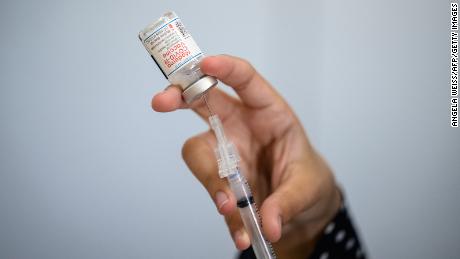
“There’s still a ground game that is being played, it’s about going door to door, it’s about getting trusted community leaders,” emergency physician Dr. Megan Ranney said.
For example, if people are directly offered a vaccine, they will often agree to get the shot, she said.
“If we do that, we will get a significant percentage of those folks who have not yet been vaccinated,” Ranney added.
The CDC is also asking businesses to help support workers to get vaccinated, Walensky said earlier this week.
“We are really asking the businesses to work with their workers to make sure that they have the paid time off to get themselves vaccinated so they can be safe,” Walensky said.
Expert: Pandemic won’t end in US until it ends globally
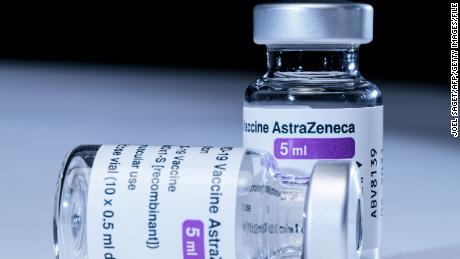
The President said that the US would share at least 20 million doses of Covid-19 vaccines by the end of next month, totaling 80 million doses that are set to be sent abroad.
The additional 20 million doses will include Moderna, Pfizer and Johnson & Johnson vaccines as well as AstraZeneca, which has to be approved by federal regulators before being shipped overseas. That effort is underway.
“What they’ve announced today is really important,” Dr. Tom Frieden, a former CDC director, told CNN on Monday. “This pandemic will not be over for the US until it’s over globally.”
Biden said the announcement was the latest effort by his administration to ramp up efforts abroad and work with other world leaders to end the pandemic and said he expected to announce progress on beating the pandemic overseas at the G7 summit in June.
Correction: An earlier version of this article gave the wrong number for people ages 12 to 17 who have received their first vaccine dose. The CDC corrected its data to say more than 3.5 million got a dose.
CNN’s Jen Christensen, Alison Kosik, Kaitlan Collins, Kate Sullivan, Naomi Thomas, Rebekah Riess, Kay Jones and Aaron Pellish contributed to this report.