May 8 (UPI) — The World Health Organization said it would list the COVID-19 vaccine made by the Chinese company Sinopharm for emergency use.
The Friday announcement means the vaccine, which Sinopharm produced in conjunction with the Beijing Bio-Institute of Biological Products, can be made part of the Covax initiative to share doses around the world.
It also makes it easier for countries to expedite their own regulatory approval to import and administer vaccines, the WHO said.
“The addition of this vaccine has the potential to rapidly accelerate COVID-19 vaccine access for countries seeking to protect health workers and populations at risk,” Mariângela Simão, WHO assistant-director general for Access to Health Products, said in the WHO’s news release. “We urge the manufacturer to participate in the COVAX Facility and contribute to the goal of more equitable vaccine distribution.”
Though the Sinopharm vaccine is already in widespread use, with an estimated 65 million doses delivered, it is the first Chinese-made vaccine to be added to the WHO’s emergency use list, The Washington Post reported.
The Sinopharm vaccine is an inactivated vero cell vaccine with easy storage requirements that make it “highly suitable for low-resource settings,” the WHO said.
The WHO estimated the vaccine’s efficacy at 79% for all age groups, although the WHO noted that few adults over 60 participated in trials, so it is difficult to assess efficacy separated by age group.
The organization is recommending the vaccine for adults over 18 in a two-dose schedule, with a spacing of three weeks to four weeks.
Each vial of the vaccine will have a vaccine vial monitor — a sticker that changes color if the vaccine is exposed to heat, so health workers know whether it can be safely used.
Before being added to the EUL, a vaccine is assessed by regulatory experts from around the world and a Technical advisory group in charge of performing the risk-benefit assessment before making a recommendation.
Carl Tobias, a law professor at the University of Richmond who tracks the vaccine approval process, told the Post it is unlikely the approval will have an effect in the United States, but that the Biden administration “may be more open to helping send this vaccine to nations with severe outbreaks like Brazil and India.”
Jennifer Huang Bouey, an epidemiologist who works with the Rand Corp., also said the approval could be a boon for developing nations that have not had access to vaccines produced in the United States and Europe.
“China has the manufacturing capacity desperately needed by the world for Covid-19 vaccines as well as the political will to support the UN’s Covax system,” Huang Bouey said.
A year in pandemic: How COVID-19 changed the world
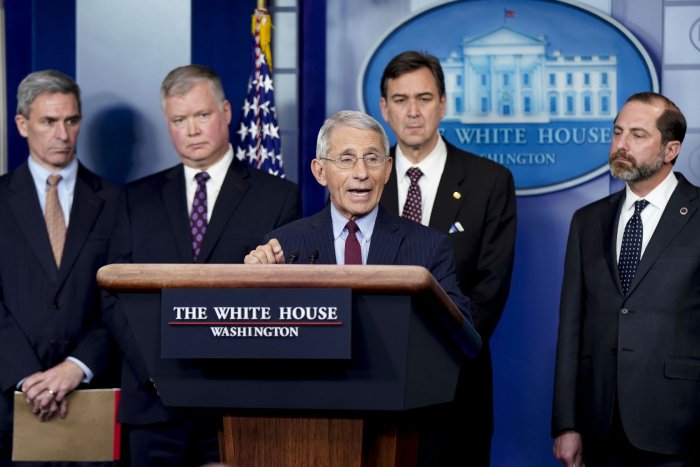
January 31, 2020
National Institutes of Health official Dr. Anthony Fauci (C) speaks about the coronavirus during a press briefing at the White House in Washington, D.C. Health and Human Services Secretary Alexander Azar (L) announced that the United States is declaring the virus a public health emergency and issued a federal quarantine order of 14 days for 195 Americans. Photo by Leigh Vogel/UPI | License Photo

February 6
A subway carriage is nearly empty during a normally busy rush hour as the deadly coronavirus continues to threaten Beijing. Photo by Stephen Shaver/UPI | License Photo
February 26
President Donald Trump said at a press briefing that the United States had 15 COVID-19 cases and the number “within a couple of days is going to down to close to zero” and that the virus would go away. Two days later, he called the coronavirus a “hoax.” Photo by Pat Benic/UPI | License Photo
March 4
Health workers in biohazard suits treat patients at a drive-through coronavirus testing center at Seoul Metropolitan Eunpyeong Hospital in South Korea. Photo by Thomas Maresca/UPI | License Photo
March 9
The cruise ship Grand Princess sails under the Golden Gate Bridge entering San Francisco Bay. The ship is being held in quarantine with 21 diagnosed cases of COVID-19 aboard. Photo by Terry Schmitt/UPI | License Photo
March 10
Chinese President Xi Jinping virtually visits patients who are being treated at the Huoshenshan Hospital in Wuhan, China. Wuhan was the epicenter of the COVID-19 outbreak. Photo by Xinhua News Agency/EPA-EFE
March 11
Trump addresses the nation from the Oval Office, saying he would be suspending all travel from Europe except Britain, for the next 30 days. Photo by Tasos Katopodis/UPI | License Photo
March 12
A shopper navigates an aisle of empty toilet paper shelving due to coronavirus panic stockpiling in San Francisco. That same day, the World Health Organization declared the coronavirus a pandemic. Photo by Peter DaSilva/UPI | License Photo
March 13
Trump declares a national emergency during a news conference at the White House, allowing the administration to utilize the Federal Emergency Management Agency and provide funding to state and local governments. Photo by Kevin Dietsch/UPI | License Photo
March 14
A Department of Health employee trains New York Army National Guard soldiers to register people on iPads at a drive-through COVID-19 mobile testing center in Glenn Island Park in New Rochelle, N.Y., where there had been an outbreak. Photo by Sgt. Amouris Coss/U.S. Army National Guard | License Photo
March 15
A traveler takes photos of a departure board showing cancelled flights at Tokyo International Airport. Photo by Keizo Mori/UPI | License Photo
March 16
A staffer from the White House Physician’s Office checks the temperature of a man entering the White House grounds. Photo by Oliver Contreras/UPI | License Photo
March 16
St. Louis Fire Department paramedic Andrew Beasley wears a mask, gloves and a gown as he disinfects the back of an ambulance with a bleach mixture after delivering a patient to the Emergency Department at Barnes-Jewish Hospital. Photo by Bill Greenblatt/UPI | License Photo
March 18
Palestinian health workers wearing protective face masks are pictured in the courtyard of a United Nations Relief and Works Agency for Palestinian Refugees school at Khan Younis refugee camp in southern Gaza. Photo by Ismael Mohamad/UPI | License Photo
March 18
A man walks on Haight Street past a boarded up business in San Francisco. Photo by Terry Schmitt/UPI | License Photo
March 20
A shopper leaves a Costco warehouse in Alexandria, Va., loaded with supplies as some items were in short supply and people became wary of visiting stores frequently. Photo by Kevin Dietsch/UPI | License Photo
March 20
A worker sweeps the floor of the New York Stock Exchange after the closing bell on Wall Street in New York City. The Dow fell another 900 points to end Wall Street’s worst week since 2008 as the floor moved to electronic trading. Photo by John Angelillo/UPI | License Photo
March 21
Wilma Grove (L) uses a cellphone to talk to her children, Judy Kekich and Ed Grove, during their visit to Delmar Gardens on the Green in Ballwin, Mo. The family has been forced to visit their 100 year-old mother every day from the outside due to the coronavirus risk. Photo by Bill Greenblatt/UPI | License Photo
March 22
The 110 Harbor Freeway in downtown Los Angeles is empty on
a Sunday afternoon, a time when traffic would normally be heavier and weekdays be bumper-to-bumper. A shelter-in-place order has been issued for the entire state of California. Photo by Jim Ruymen/UPI | License Photo
March 23
Members of the media practice social distancing before Gov. Andrew Cuomo speaks with the National Guard in New York City. The Javits Center is setting up to be turned into field hospitals to test and possibly treat cases of COVID-19. Photo by John Angelillo/UPI | License Photo
March 23
Palestinian groom Mohamed abu Daga (L), and bride Israa abu Daga wear face masks during a photo shoot at a studio before their wedding ceremony in Khan Yunis in the southern Gaza. Photo by Ismael Mohamad/UPI | License Photo
March 23
A couple wait to be checked by emergency medical technicians for coronavirus symptoms at a triage station in Hayward, Calif. Photo by Peter DaSilva/UPI | License Photo
March 27
Trump (C) participates in a signing ceremony for a $2 trillion-dollar coronavirus relief bill in the Oval Office at the White House. The economic stimulus package, the largest in U.S. history, provides economic bailouts to companies, independent contractors and includes direct payments to individuals. Photo by Erin Schaff/UPI | License Photo
March 29
A COVID-19 quarantine is set up in a cluster of RVs for homeless people at Dockweiler State Beach in Los Angeles. Photo by Jim Ruymen/UPI | License Photo
March 30
The USNS Comfort Navy ship moves on the Hudson River on route to dock at Pier 90 to relieve pressure on hospitals overwhelmed with coronavirus patients in New York City. Photo by John Angelillo/UPI | License Photo
April 12
Pope Francis delivers his Urbi et Orbi message following Easter Sunday Mass behind closed doors at St. Peter’s Basilica at the Vatican in Italy. Pool Photo by Galosi/Spaziani | License Photo
April 17
Palestinian Imam Ali Hamdan delivers the call for prayer alone at the Al-Abrar Mosque in Rafah southern Gaza. The Palestinian government extended closure of mosques and banned congregational prayers during the holy month of Ramadan to curb the spread of COVID-19. Photo by Ismael Mohamad/UPI | License Photo
April 17
Workers open the first batch of Anheuser Busch hand sanitizer after it arrives at a distribution center in St. Louis, Mo. Created weeks ago, the sanitizer made in California and New York, is being made for first responders amid a shortage. Photo by Bill Greenblatt/UPI | License Photo
April 18
A man holds a copy of the constitution as he yells from his vehicle during a protest to reopen Maryland and end the stay-at-home order imposed during the pandemic in Annapolis, Md. Drivers circled the state’s Capitol honking their horns and calling for Gov. Larry Hogan to end the order. Photo by Kevin Dietsch/UPI | License Photo
April 19
Rev. Bob Evans gestures to photos of parishioners during his Sunday service at the Holy Spirit Catholic Church in Maryland Heights, Mo. Since members cannot attend in person, Evans asked them to send in photos; he received over 500. The photos are taped to the pews where the family usually sits, while he performs the weekly service via Facebook Live. Photo by Bill Greenblatt/UPI | License Photo
April 21
Nurses hold photos of fellow healthcare workers who have died from COVID-19 during a protest at the White House, demanding the Trump administration provide extra personal protective equipment. Photo by Kevin Dietsch/UPI | License Photo
April 28
A poll worker hands out a ballot with protective glovers during the special election for Maryland’s 7th Congressional District to choose a successor to the late Rep. Elijah Cummings in Baltimore. Maryland postponed its primary election until June due to coronavirus pandemic but still held the special election to replace Cummings. Photo by Kevin Dietsch/UPI | License Photo
April 30
First-grader Violet Kimbrough works on a French lesson as she participates in distance learning in Silver Spring, Md. Schools in the D.C. metropolitan region instituted remote learning programs as schools remained shuttered. Photo by Kevin Dietsch/UPI | License Photo
May 2
Sami Snow (C) reacts as friends pass by during a surprise drive-by bat mitzvah celebration for her in Potomac, Md.. The family held a small ceremony at the home with their rabbi officiating online followed by a surprise drive by celebration. Photo by Kevin Dietsch/UPI | License Photo
May 6
Stylist Chrissy Whitley (L) trims Mark Nolting’s hair at JF Hair Co. in Union, Mo. The salon reopened on May 4 after being closed since March 23 under state restrictions. Photo by Bill Greenblatt/UPI | License Photo
May 11
French security forces wear protectives masks as they arrest Yellow Vests anti-government militants attempting to gather at Republic Square in Paris. French authorities started lifting the COVID-19 lockdown, but people living in regions that are most at risk, notably in Paris, still faced tight restrictions. Photo by Eco Clement/UPI | License Photo
May 11
Kayden Tree, 8, grimaces as a swab is inserted into his nose during a COVID-19 test at a CareSTL Health testing site in St. Louis. Photo by Bill Greenblatt/UPI | License Photo
May 17
Officially designated social distancing circles are set up to prevent the spread of coronavirus in Domino Park in New York City. Photo by John Angelillo/UPI | License Photo
May 18
Trump reveals that he is taking hydroxychloroquine prophylaxis against COVID-19 as he participates in a roundtable discussion with restaurant executives and industry leaders in the State Dining Room of the White House. Trump touted the anti-malaria drug for treatment and prevention for the virus though it is scientifically unproven. Pool Photo by Doug Mills/UPI | License Photo
May 20
High school seniors stand in vehicles as their names are called during a drive-through graduation ceremony at Rockwood Summit High School in Fenton, Mo. Seniors have been out of school since March, unable to participate in prom, sports and traditional graduation ceremonies because of coronavirus concerns. Photo by Bill Greenblatt/UPI | License Photo
May 27
President Xi Jinping (C) and Premier Li Keqiang (R) sing the national anthem during the closing ceremony of the Chinese People’s Political Consultative Conference in the Great Hall of the People in Beijing. After being postponed from March due to the coronavirus outbreak, the annual CPPCC parliamentary session closed in the capital with over 2,0000 delegates from across China in attendance. Photo by Stephen Shaver/UPI | License Photo
May 29
Black Lives Matter protesters clash with New York Police Department officers as protests around the country continue over the death of George Floyd at the hands of the Minneapolis police amid the pandemic. Officer Derek Chauvin was arrested days after video circulated of him holding his knee to Floyd’s neck for more than eight minutes before Floyd died. Photo by John Angelillo/UPI | License Photo
June 20
Vice President Mike Pence speaks at a campaign rally for Trump at the Bank of Oklahoma Center in Tulsa, Okla., even as coronavirus cases are on the rise in many states. Photo by Kyle Rivas/UPI | License Photo
June 27
A woman wears a protective face mask that reads “Hate Is Not A Virus” as members of Concerned AsAm Citizens of NYC greet people on the street and ask them to take part in the “Asians Are Not A Virus 2020” campaign in the Chinatown section of New York City. Due to the pandemic, anti-Asian hate crimes sprung up across the United States. Photo by John Angelillo/UPI | License Photo
July 2
Business owners, most of whom had to close, gather with anti-government demonstrators over deteriorating living conditions in Beirut, Lebanon, where the government raised subsidized bread prices. Photo by Nabil Mounzer/EPA-EFE
July 2
People wait in their cars to be tested for COVID-19 at the Hard Rock Stadium in Miami. The site ran out of tests after 1,000 cars as Florida experienced a spike in COVID-19 cases, surpassing the 10,000 mark in the prior 24 hours. Photo by Gary I Rothstein/UPI | License Photo
July 24
Israelis enjoy a bar in the Mahane Yehuda Market in Jerusalem before the Jewish Sabbath. Photo by Debbie Hill/UPI | License Photo
July 24
People gather to take photos at the National Stadium in Tokyo, where the opening ceremony for the 2020 Summer Olympics were originally planned to open on July 24. The games were postponed for a year due to the pandemic. Photo by Keizo Mori/UPI | License Photo
August 7
Small groups of tourists stand near the Parthenon at the Acropolis in Athens, Greece. Tourism has been slow to return since Greece opened up to international travelers on July 1. Photo by Thomas Maresca/UPI | License Photo
August 8
An activist ties a Brazilian national flag on an installation with red balloons and crosses honoring victims of the coronavirus pandemic in Rio de Janeiro, Brazil. The country surpassed 100,000 coronavirus deaths on this day. Photo by Antonio Lacerda/EPA-EFE
August 17
The control room where live feeds are managed is in operation for the first night of the virtual Democratic National Convention in Milwaukee, Wis. The convention, which was once expected to draw 50,000 people to the city, is taking place virtually due to the pandemic. Pool Photo by Scott Olson/UPI | License Photo
September 15
Models walk on the runway at the Bronx and Banco fashion show on the rooftop of Spring Studios as part of New York Fashion Week in New York City. Most shows were virtual and some big designers opted to skip it altogether. Photo by John Angelillo/UPI | License Photo
September 18
New York Mets starting pitcher Steven Matz (C) walks back to the mound after Atlanta Braves Marcell Ozuna hits an RBI single against a stadium of cardboard cut-out fans at Citi Field in New York City. Photo by John Angelillo/UPI | License Photo
September 21
Some 20,000 American flags are placed by the COVID Memorial Project on the National Mall in Washington, D.C., to represent the 200,000 Americans who have died. Photo by Pat Benic/UPI | License Photo
September 26
Demonstrators attend a “We Do Not Consent” rally at Trafalgar Square in London to protest new coronavirus restrictions. Photo by Andy Rain/EPA-EFE
September 26
Trump introduces Judge Amy Coney Barrett as his nominee for the U.S. Supreme Court during a ceremony that ended up being a coronavirus super-spreader event in the Rose Garden of the White House. Photo by Shawn Thew/UPI | License Photo
September 29
Children wear face masks as they wait on line to enter P.S. 188 The Island School in New York City as the city reopened some schools with a combination of in-person and at-home classes. Photo by John Angelillo/UPI | License Photo
October 4
White House Chief of Staff Mark Meadows (background) listens as Trump’s physician Dr. Sean Conley gives an update on the president’s condition after testing positive for coronavirus at the Walter Reed National Military Medical Center in Bethesda, Md. Photo by Michael Reynolds/UPI | License Photo
December 14
Sandra Lindsay (L), a nurse at Long Island Jewish Medical Center, is inoculated with the first COVID-19 vaccine in the United States by Dr. Michelle Chester in New York City. Pool Photo by Mark Lennihan/UPI | License Photo
January 1, 2021
Confetti fills the air and fireworks explode over One Times Square, which is empty and closed to the public due to the coronavirus pandemic after midnight on New Year’s Eve. Photo by John Angelillo/UPI | License Photo
January 17
A healthcare professional prepares syringes to deliver COVID-19 vaccinations at a New York state site in Harlem. Photo by John Angelillo/UPI | License Photo
January 23
A Palestinian nurse prepares to give the Pfizer-BioNTech COVID-19 vaccine in the Israeli Clalit Medical Center in East Jerusalem. Photo by Debbie Hill/UPI | License Photo
February 5
Reporters are reflected in the sunglasses of House financial services committee Chairwoman Maxine Waters, D-Calif., during a press conference outside the West Wing of the White House after a meeting with President Joe Biden to new coronavirus relief legislation. Photo by Oliver Contreras/UPI | License Photo
February 12
Members of North Korean separated families make an offering at an altar for Lunar New Year near the DMZ at Imjingak Park in Paju, South Korea. The tradition is held every year but turnout is smaller in 2021 because of COVID-19. Photo by Thomas Maresca/UPI | License Photo
February 22
From left to right, President Joe Biden, first lady Jill Biden, Vice President Kamala Harris and second gentleman Doug Emhoff hold a moment of silence at a candle-lighting ceremony on the South Portico of the White House for the 500,000 Americans who have died of COVID-19. Photo by Jim Lo Scalzo/UPI | License Photo
February 28
Bonnie Rybstein (L) and her husband, Jack Rybstein, both survivors of the Holocaust in their late 90s, sit together after they receive their first COVID-19 vaccines at a pop-up site for seniors including 60 Holocaust survivors in New York City. Photo by John Angelillo/UPI | License Photo