
Tens of millions of Americans haven’t started their vaccinations yet, National Institutes of Health Director Dr. Francis Collins told CNN on Wednesday, and “a lot of those folks are still not sure that they want to take part in this amazing opportunity to put this virus behind us.”
“We have to really figure out how to get the messages out there so that those who are still undecided get the information they need to see why this is really something they would want to do.”
But experts say the US needs much higher levels of vaccination to control the virus.
“If we’re going to get past this terrible pandemic, it’s going to take most of us being immunized. Otherwise, the virus can just keep going on and on,” Collins said.
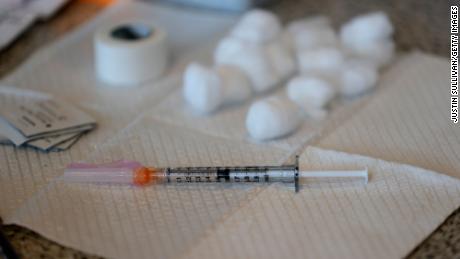
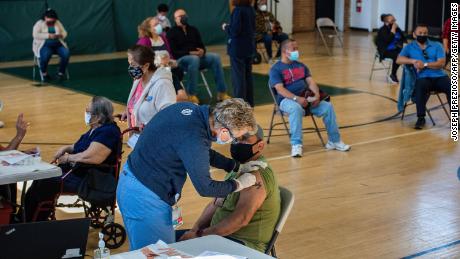
Federal, state and local efforts are ongoing to push up the numbers of those vaccinated.
“I think our effort shifts, and it shifts to younger people who just don’t think about Covid quite as much,” Andy Slavitt, the White House senior adviser for Covid-19 response, told CNN.
“We truly are close to that light at the end of the tunnel. Those of you who have not yet been vaccinated, please go get a vaccine as quickly as you can. Do it for yourself, do it for your family, do it for your friends, and do it so that all of us can put this global pandemic behind us,” Hogan said in a statement.
Hundreds of Americans die of Covid-19 every day
While many government leaders are highlighting the proximity to ending the pandemic, Covid-19 numbers in the US are still high.
In the past week, a daily average of more than 62,900 Covid-19 infections was reported, according to data from Johns Hopkins University.
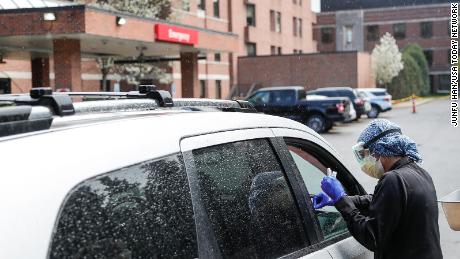
And hundreds of Americans infected with coronavirus die every day. In the past week alone, the US reported more than 4,900 Covid-19 deaths.
In Washington state, Covid-19 cases are increasing in most counties and hospitalizations are up, with a sharp increase in the number of young adults who are hospitalized, said Dr. Umair Shah, the state’s secretary of health.
And most counties have also detected variants, Shah said.
Variants first found in California appear to be more infectious, study finds
Two variants that are closely related and first identified in California seem to replicate better in the noses of infected people, which could explain why they spread faster than the original virus, researchers reported Thursday.
The team led by Dr. Charles Chiu at the University of California, San Francisco did in-depth sequencing of more than 2,000 samples from people who tested positive for coronavirus across California. They found the B.1.427/B.1.429 variants increased from no samples in September to half of all samples taken in January.
Nose swab examinations showed there was twice as much virus in samples from people infected with the variants compared to those with the older strains.
Better genomic sequencing is needed to stay on top of these variants, the team wrote.
The two variants aren’t as transmissible as the B.1.1.7 variant first seen in Britain — which is now the most common variant found in the United States — the team reported in the journal Cell.
Greater risks for people who’ve had Covid-19
Covid-19 survivors, even those who had a mild form of the disease, appear to be at a much greater risk of death and need more medical care in the six months after their diagnosis, according to a study published Thursday in Nature.
In what the authors say is the largest study yet of the long-term impacts of Covid-19, researchers looked at the records of more than 73,000 patients at the Veterans Health Administration who had had Covid-19 but weren’t hospitalized with it, examining the records over a six-month period after their diagnoses.
The researchers found that patients who had Covid-19 had a 60% higher risk of death between one and six months after getting sick than those who had not had Covid-19. They also had a 20% greater chance of needing more medical care over the six months.
Respiratory problems were the most common complaint for those patients, but they also had a higher number of diagnoses for nervous system problems, headaches, trouble sleeping, anxiety, fear, trauma, stress disorders, stomach problems and metabolic disorders such as diabetes and obesity.
They also had more treatment for low energy and fatigue.
The researchers also looked at Covid-19 patients who had been hospitalized and saw similar results. The sickest patients seemed to have more long-term complications.
A new study highlights the importance of vaccinations
Among 417 employees at Rockefeller University who were fully vaccinated with either the Pfizer or Moderna vaccines, only two of them had breakthrough infections later, according to the study.
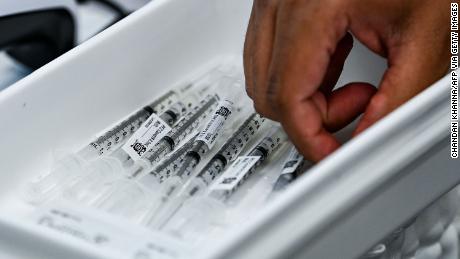
The researchers found that variants with several differences from the original virus caused those breakthrough infections.
“We have characterized bona fide examples of vaccine breakthrough manifesting as clinical symptoms,” they wrote. “These observations in no way undermine the importance of the urgent efforts being taken at the federal and state levels to vaccinate the U.S. population. They also lend support to efforts to advance a new vaccine booster (as well as a pan-coronavirus vaccine) to provide increased protection against variants.”
Another study that looked at infections in nursing homes in Chicago found that most fully vaccinated residents were not infected with the virus even after someone in the same facility tested positive.
Of those breakthrough cases, two-thirds were asymptomatic. Two residents were hospitalized and one of those residents died, the CDC said. The person who died had three underlying conditions, the agency added.
CNN’s Rebekah Riess, Jen Christensen, Jacqueline Howard and Jenn Selva contributed to this report.