
Hiring slowed modestly in December as employers added 223,000 jobs to close out an otherwise booming year, possibly foreshadowing the deeper pullback and recession that many economists expect in 2023.
The unemployment rate fell from 3.7% to 3.5%, the Labor Department said Friday.
Economists surveyed by Bloomberg had estimated that 200,000 jobs were added last month.
What the Fed really wants:Putting the brakes on runaway wage growth could help avoid a recession in 2023, but it won’t be easy
Have all jobs lost to COVID been recovered?
By August, the economy recovered all 22 million wiped out in the health crisis. But payrolls are still a couple of million jobs shy of where they would be if the pandemic hadn’t happened, based on population growth. Leisure and hospitality, the sector hit hardest by the crisis, remains nearly 1 million jobs below its pre-COVID level.
Monthly job growth slowed through 2022, from a blockbuster pace of 457,000 the first seven months of the year to a still robust 275,000 since July. Hiring has softened since all 22 million lost jobs were recovered. Also, high inflation –and the Fed’s aggressive interest rate hikes to tame it – have started damping economic activity and the labor market.
U.S. economy recession in 2023?
Most economists expect the U.S. to slip into a mild recession this year as the Fed’s rate increases take a growing toll on spending and growth. Such forecasts have further weakened consumer and business confidence.
Yet despite the hurdles, the labor market has been remarkably resilient, repeatedly defying forecasts for a more dramatic slowdown. To cope with soaring inflation, many households have drawn from the $2.6 trillion in additional savings they amassed from government stimulus checks and reduced spending during COVID.
Is a 2023 recession coming?:Job growth likely to slow sharply, companies brace for impact
What to avoid, what to buy?:How to financially prepare for a recession.
Is there still a labor shortage?
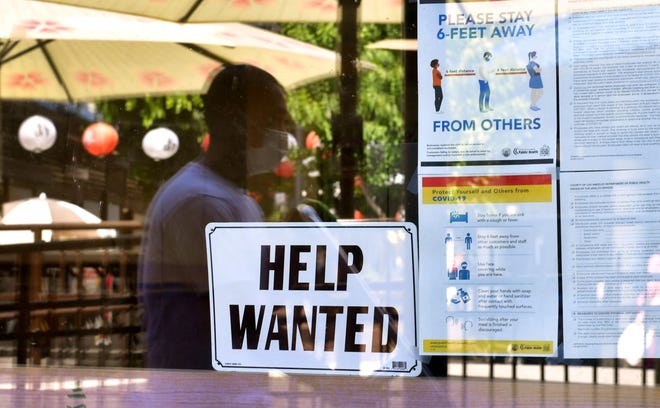
And since millions of Americans retired early or took a hiatus during COVID, the resulting labor shortages left employers struggling to find workers and reluctant to announce layoffs despite the dire forecasts. Initial jobless claims, a gauge of layoffs, are still low, though Amazon announced 18,000 job cuts on Thursday, the latest in a huge wave of tech company layoffs this year.
Many continue to hire despite the cloud of uncertainty over the economy.
Judy Briggs, owner of a 1-800-GOT-JUNK franchise in Hopkinton, Massachusetts, says sales increased 3% in 2022, down from about 15% the past several years, and she expects a similar modest gain this year. The steep housing downturn means fewer people are moving, softening demand for a service that hauls away items such as old furniture, appliances, tires.
But she says, “People (including renters) are still moving and still getting rid of junk,” she says.
Also, in light of the labor shortages, she wants to have enough staff to handle employee turnover and COVID-related absences.
She plans to add about five workers to her permanent staff of 35, the same as last year.
“It’s hard to find employees these days,” she says.
Don’t forget about your 401(k):As job switchers chase higher wages, they may be leaving money behind
Is your state one of them?:Minimum wage is going up in 23 states as $15 an hour gains steam